What Are the 7 Best Brushless DC Electric Motors?

Choosing the seven best brushless motors is not a popularity contest. It is a matter of matching torque, speed, voltage, and control needs to the job. A small motor spinning a camera gimbal has different demands from one driving a pump or an electric bicycle. The right choice depends on the load, operating hours, available controller, and cooling. Specifications matter. So does the application.

The International Energy Agency’s Energy-Efficient World report estimates that electric motor-driven systems consume about 45% of global electricity. That figure puts motor selection in perspective: efficiency can affect energy use well beyond a single device. The U.S. Department of Energy’s Improving Motor and Drive System Performance: A Sourcebook for Industry also emphasizes evaluating motors together with their drives and operating conditions. A motor’s nameplate efficiency alone cannot tell the whole story. Real performance changes with load, installation, and control settings.

This guide compares seven brushless options by practical use, not just advertised power. It considers efficiency, torque delivery, speed range, thermal behavior, controller compatibility, and maintenance needs. Look for details such as shaft size, rated voltage, and continuous current before buying. A high peak-power figure may look impressive, but it does not guarantee reliable performance under sustained load. That distinction is easy to miss. The comparison is not perfect: manufacturers test and present specifications differently, so published figures may not align directly. Use them as a starting point, then verify the motor against your actual operating conditions.
What Are the 7 Best Brushless DC Electric Motors?

What Defines a Brushless DC Electric Motor?

A brushless DC electric motor produces rotation without the rubbing carbon brushes found in traditional brushed motors. Its stator contains fixed copper windings, while its rotor usually carries permanent magnets. When current passes through selected windings, magnetic forces pull and push the rotor around.

The switching is electronic. A controller sends current through the motor phases in a timed sequence, using rotor-position information from Hall sensors or, in sensorless designs, electrical signals generated by the motor. The motor needs this controller; connecting a DC supply directly to its windings will not provide normal, controlled operation. No brushes. Less wear.

Removing brushes reduces a common source of friction, electrical arcing, and routine replacement. It can also support efficient speed control in equipment such as a ventilation fan or small pump. But brushless does not mean maintenance-free: bearings can wear, and heat can damage windings or magnets. The controller adds cost and complexity, too. Datasheets do not always use “BLDC” consistently, so check the stated drive method and motor specifications rather than relying on the label alone.
How Brushless DC Motors Generate and Control Motion

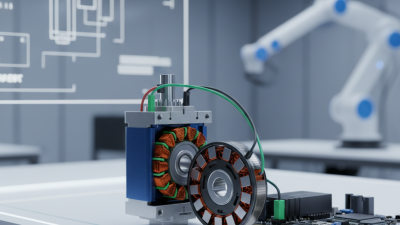
A brushless DC motor creates motion when its controller switches current through stationary coils. The changing magnetic field pulls the rotor’s permanent magnets around. No brushes rub against a commutator, so there is less contact wear. That matters. In a small fan, the rotor may spin smoothly for hours, while the controller quietly manages each electrical transition.

The controller needs to know when to energize each coil. Some motors use Hall sensors to report rotor position; others estimate it from electrical signals. It then times the phase currents to keep torque moving in the useful direction. Pulse-width modulation adjusts the power delivered, helping control speed without simply wasting excess energy as heat. A poor match between motor and controller can bring noise, warmth, or uneven starts.

For seven different applications, “best” depends on the load, not just the motor’s advertised speed. A pump may need steady torque at low speed; a compact tool may need quick acceleration and careful heat management. Check the rated voltage, current, torque curve, cooling, and feedback method against real operating conditions. One detail is easy to overlook: a motor that performs well on a bench may behave differently inside a tight enclosure. Measurements help, though they rarely answer every question.

What Are the 7 Best Brushless DC Electric Motors? — How Brushless DC Motors Generate and Control Motion

At a constant rotor speed of 3,000 RPM, electrical frequency rises with pole count. The values are calculated using electrical frequency (Hz) = RPM × pole pairs ÷ 60. The motor controller uses this electrical cycle to time phase switching and produce rotating motion.

Which Features Determine a Motor’s Performance?

A brushless DC motor’s performance starts with its torque-speed curve, not its advertised peak speed. Check whether it can deliver the required torque at your normal operating speed. A small fan may need steady rotation, while a compact actuator may need strong starting torque.

Heat matters. Continuous current ratings and winding temperature limits show whether the motor can sustain that load without overheating. A brief peak rating does not describe all-day performance.

Voltage, controller compatibility, and rotor design also shape results. The controller must match the motor’s electrical requirements and support smooth commutation; poor matching can cause vibration, noise, or wasted power. Lower rotor inertia can help a motor accelerate quickly, but it may not suit every load.

Bearing quality and shaft alignment affect noise and service life, especially when a pulley places side force on the shaft. Small details count. In testing, compare speed, current, and temperature under the same load; no-load speed alone can be misleading.

I would also leave a margin for blocked airflow or warmer surroundings, though that margin depends on the application. A motor that looks efficient on paper may run hot inside a cramped enclosure.

Seven Leading Brushless DC Motors and Their Key Strengths

What Are the 7 Best Brushless DC Electric Motors?
Seven Leading Brushless DC Motors and Their Key Strengths

“Best” depends on the load, speed, space, and cooling available. The International Energy Agency estimated that electric motor-driven systems used about 45% of global electricity in its 2011 report, Energy-Efficiency Policy Opportunities for Electric Motor-Driven Systems. That figure covers many motor types, not BLDC motors alone, but it shows why careful motor selection matters.

Seven useful BLDC configurations offer distinct strengths. Inner-rotor motors suit compact, high-speed tools. Outer-rotor designs can provide strong torque at lower speeds, useful in fans and wheels. Slotless motors reduce cogging and vibration, helping precision instruments move smoothly. High-speed designs deliver substantial power from a small package, though heat needs attention. Frameless motors fit directly into a machine’s structure, saving space in robotics. Integrated motor-controller units simplify wiring and setup. Sealed motors can resist dust or moisture when their rated protection is suitable. No format wins everywhere. A neat ranking can mislead: real performance depends on the complete drive system.

Tips: Compare torque-speed curves, continuous current, and thermal limits under your actual operating conditions. Check the protection rating, too. A motor that feels cool during a brief test may overheat during a long shift.

How to Choose a Brushless DC Motor for an Application

Choosing a brushless DC motor starts with the load, not a product ranking. Estimate the torque needed to start, run, and accelerate the mechanism. A small conveyor, for example, may need more starting torque when carrying a full bin. Check the required speed and operating voltage, too. Peak power alone can mislead.

Match the motor to its controller and the application’s duty cycle. Some motors include position sensors; others rely on sensorless control, which may behave differently at low speeds. Confirm that the controller supports the motor’s voltage, current, and commutation method. Leave room for brief current peaks. Heat matters. A motor running inside a warm enclosure may need a lower continuous load than its headline rating suggests.

Then inspect the physical details: shaft diameter, mounting holes, cable clearance, and available cooling. Dust, vibration, and frequent starts can change what “suitable” means. Ask for continuous torque and speed data, not just maximum figures. If possible, test the motor with the real load and controller. A bench test will not reproduce every condition, but it can reveal excess noise, sluggish starts, or rising case temperature. One part is easy to overlook: installation space. Measure it twice. The neatest specification sheet may still describe the wrong motor.

What Are the 7 Best Brushless DC Electric Motors? — How to Choose a Brushless DC Motor for an Application

“Best” depends on the application. The configurations below describe common BLDC motor choices; their characteristics can overlap, and actual performance depends on the motor design, controller, and operating conditions.

Motor configuration Typical characteristics Often suited to Main trade-offs What to check when choosing
1. Inner-rotor (inrunner) BLDC The rotor sits inside the stator. This layout commonly supports compact designs and relatively high rotational speeds. Pumps, fans, power tools, and drives where speed and a small motor diameter are important. May need gearing or a belt drive when the application requires high output torque at low speed. Required speed range, torque after any gearbox, cooling, and allowable noise and vibration.
2. Outer-rotor (outrunner) BLDC The rotor surrounds the stator. Its larger rotor radius can provide useful torque at lower speeds for a given motor size. Small direct-drive fans, lightweight propulsion, and compact mechanisms that benefit from a larger-diameter rotor. The larger rotating shell needs adequate clearance and mechanical protection; maximum speed depends on the specific design. Rotor inertia, mounting arrangement, balancing, operating speed, and exposure to dust or impact.
3. Slotted BLDC Stator windings sit in iron-core slots. This established construction can provide strong electromagnetic loading and good torque capability. General-purpose machinery, pumps, actuators, and applications needing a broad range of motor sizes and designs. Slotting can contribute to cogging torque and torque ripple, which may affect smooth low-speed motion. Cogging and torque-ripple limits, winding temperature, duty cycle, and the controller’s commutation method.
4. Slotless BLDC The winding is arranged without conventional stator slots, reducing slot-related cogging and supporting smooth rotation. Precision instruments, quiet fans, scanners, and applications requiring smooth motion at low speed. The winding and thermal design can limit continuous torque or power density compared with some slotted designs of similar size. Continuous and peak torque, winding temperature, low-speed smoothness, and required acceleration.
5. Axial-flux BLDC Magnetic flux runs parallel to the shaft. The motor can have a short axial length and a disc-like form factor. Space-constrained direct-drive systems and designs where a flat motor shape is useful. Mechanical alignment, heat removal, and manufacturing details can be more demanding; performance varies substantially by design. Available axial space, cooling path, air-gap tolerances, mounting stiffness, and continuous torque rating.
6. High-speed BLDC Designed to operate at high rotational speed, often with attention to rotor strength, bearings, balance, and heat management. Spindles, compact compressors, and other loads that require high speed rather than high torque at the shaft. Requires suitable bearings, accurate balancing, a compatible controller, and careful attention to overspeed limits. Maximum safe speed, load inertia, bearing life, rotor containment, controller electrical frequency, and cooling.
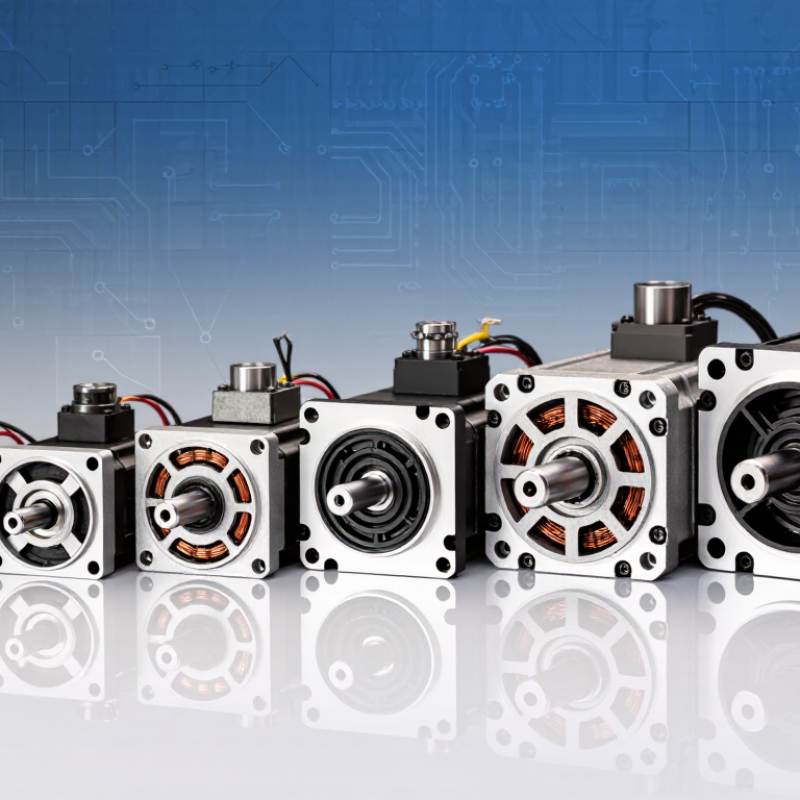
7. Integrated BLDC servo motor Combines a BLDC motor with an onboard drive and, in many models, position or speed feedback such as an encoder. Robotics, automated equipment, and compact motion systems needing controlled speed or position. Integrated electronics can simplify wiring but may limit serviceability, customization, or heat dissipation in constrained installations. Feedback type and resolution, communication interface, control modes, protection ratings, and continuous torque.

Selection reminder: Compare continuous and peak torque, speed range, supply voltage, duty cycle, cooling, controller compatibility, feedback needs, mounting constraints, and environmental conditions. Use the motor’s datasheet and application requirements to verify suitability.