How to Choose a Frameless Brushless DC Motor
Choosing a Frameless Brushless Dc Motor is rarely a simple catalog decision. The motor must disappear into your mechanism, yet still deliver dependable torque, speed, and thermal performance. In practice, a compact motor can look ideal on paper and fail after several minutes of continuous operation. Heat has a way of exposing weak assumptions.
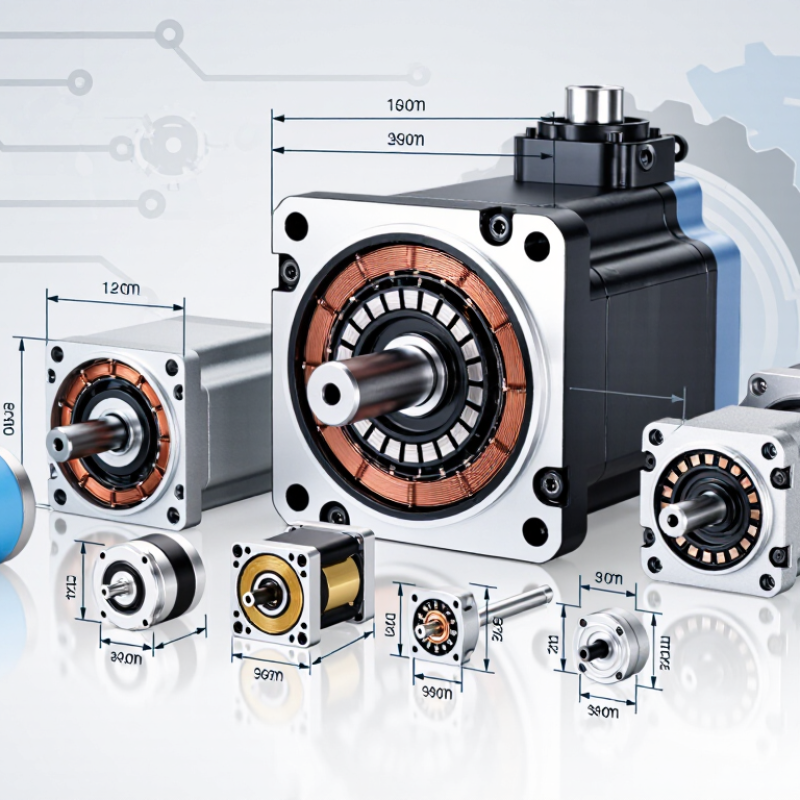
This guide explains the selection process from an engineering perspective. It examines torque requirements, operating speed, voltage, winding options, rotor balance, and controller compatibility. Mechanical integration matters equally. Check the stator’s inner diameter, rotor clearance, axial length, mounting method, and allowable misalignment before ordering samples. A few tenths of a millimeter can affect vibration and efficiency. Do not trust a drawing alone.
Real applications also demand careful testing. Measure winding resistance, no-load current, temperature rise, and loaded torque with consistent instruments. Review the manufacturer’s test conditions, because published ratings may reflect ideal cooling or short duty cycles. Encoder resolution and commutation accuracy deserve attention in robotics, gimbals, medical equipment, and precision automation. The quietest motor is not always the best motor. Sometimes, it simply runs below its useful load.
A reliable choice balances performance, integration effort, supplier support, and lifecycle cost. Compare verified curves, request engineering data, and test the motor inside the actual assembly. Prototype evidence matters more than attractive specifications. Mistakes happen, even with experienced teams. The goal is to discover them early, before production makes them expensive.
Define the Application Requirements and Operating Conditions
How to Choose a Frameless Brushless DC Motor
A frameless brushless DC motor should match the machine, not only the available space. Define the required torque, speed, acceleration, and duty cycle before comparing motor data. Include the load inertia and friction. These values strongly affect startup response and controller sizing.
A motor operating inside a compact joint may face limited cooling, tight tolerances, and frequent reversals. Record the real operating temperature, supply voltage, ambient conditions, and available installation space. Do not rely on ideal laboratory conditions.
Tips: Measure the load directly. Check peak and continuous torque. Allow thermal margin. Confirm the rotor and stator fit together correctly.
Operating conditions often expose weaknesses that calculations miss. Consider shock, vibration, humidity, dust, and cable movement. If the motor works near sensitive sensors, examine electrical noise and grounding requirements.
Feedback selection also matters. An encoder may improve position control, but it needs space, alignment, and proper commissioning.
I have seen designs fail because the peak torque looked sufficient, while repeated acceleration caused overheating. That mistake is easy to make. A specification can seem complete and still hide a mismatch.
Review the motor with its controller, bearings, shaft, and cooling path. Test the complete assembly at the highest expected load.
Monitor winding temperature during repeated cycles, not just one short run. Allow manufacturing tolerances and future load changes.
No calculation replaces testing. Recheck the assumptions when the prototype behaves differently.
Compare Motor Size, Torque, Speed, and Power Specifications
How to Choose a Frameless Brushless DC Motor
Choosing a frameless brushless DC motor starts with the load, not the catalog photograph.
In prototype testing, I measure shaft torque, required speed, duty cycle, and available installation space. Motor size affects more than fit. A larger stator often provides higher torque and better thermal capacity. However, it can increase rotor inertia and reduce acceleration. Check the stator diameter, stack length, rotor clearance, and mounting tolerance. A millimeter can matter.
Torque specifications should separate continuous torque from short peak torque.
Continuous torque determines safe operation during long cycles. Peak torque supports acceleration or brief load changes. Do not select a motor from peak torque alone. Measure under load. Speed ratings also need careful reading. No-load speed may look impressive, but winding resistance, back EMF, and controller voltage reduce speed during operation. Confirm the expected speed at the actual current and voltage.
Power connects torque and speed: mechanical power equals torque multiplied by angular speed.
A motor may deliver strong low-speed torque yet lack enough power at higher speed. Review winding resistance, current limits, efficiency, and cooling conditions. Temperature testing is essential because heat reduces insulation life and available torque. I once chose a motor that met the calculated torque, but its compact housing trapped heat. The calculation was correct; the assumption was weak. Use a temperature sensor during realistic duty cycles, then compare measured results with the datasheet. Thermal limits are real.
Evaluate Winding, Magnet, and Rotor Design Options
Choosing a frameless brushless DC motor starts with the winding, magnet, and rotor working as one system. A winding with more copper can deliver higher torque, but it also produces more heat in a confined space. Check the slot fill factor, wire diameter, phase resistance, and expected duty cycle. A motor running at low speed may need thicker wire, while high-speed operation often favors fewer turns. I have seen designs fail because the winding looked efficient on paper but could not reject heat through the surrounding assembly.
Magnet selection affects torque density, speed capability, and thermal margin. Stronger magnets may reduce motor size, yet they can increase cogging or create difficult control behavior. Review the magnet’s temperature rating, coating, retention method, and operating environment. The air gap matters greatly. Even a small increase can reduce torque and efficiency. Prototype testing with a thermocouple and dynamometer is more reliable than relying on catalog values alone.
Rotor design deserves equal attention. A lightweight rotor accelerates quickly, but a heavier rotor can smooth torque variation. Examine the rotor’s inertia, balance, shaft interface, and magnet attachment under maximum speed. Small eccentricities may cause vibration that becomes obvious only after installation. Do not overlook assembly tolerances; frameless parts depend on the customer’s housing for alignment. A spreadsheet may predict excellent performance, but real housings often introduce friction, heat paths, or misalignment that the initial model missed.
How to Choose a Frameless Brushless DC Motor: Winding, Magnet, and Rotor Design Options
The charts show representative engineering midpoints for commonly used frameless BLDC design options. Actual results depend on slot geometry, current density, thermal paths, air-gap length, magnet grade, and mechanical constraints.
Winding: Typical Copper Fill Factor (%)
Higher fill factor can increase copper utilization, but hairpin and concentrated windings may require tighter manufacturing tolerances and can increase AC copper loss.
Magnet: Typical Remanence (T)
Higher remanence generally supports greater air-gap flux density and torque density. Temperature capability, corrosion protection, cost, and demagnetization margin must also be evaluated.
Rotor: Typical Saliency Ratio (Lq/Ld)
A higher saliency ratio can provide reluctance torque and field-weakening benefits, while surface-magnet rotors usually offer simpler construction and lower saliency.
Values are representative midpoints of commonly reported design ranges, not guaranteed limits. Final selection should be validated with electromagnetic, thermal, structural, and high-speed rotor analysis.
Check Control, Feedback, Cooling, and Integration Requirements
How to Choose a Frameless Brushless DC Motor
Control, feedback, cooling, and mechanical integration should guide your motor selection. A high torque rating alone proves very little. The IEA’s Energy Efficiency 2023 report estimates that electric motor systems consume about 45% of global electricity. Small efficiency losses can therefore become significant in continuous-duty equipment.
Match the motor to the controller’s voltage, peak current, and commutation method. Field-oriented control usually offers smoother torque than basic six-step control. Check current-loop bandwidth and acceleration demands. In bench testing, poor tuning can create audible vibration and unexpected heating. Feedback choices include Hall sensors, incremental encoders, resolvers, and sensorless estimation. Select resolution according to speed, position accuracy, and startup load. Do not treat feedback as an afterthought.
Cooling needs equal attention. The U.S. Department of Energy’s 2022 Motor Systems Market Assessment estimated U.S. industrial motor systems consume roughly 679 billion kilowatt-hours annually. Thermal design affects both efficiency and service life. Confirm the stator’s contact area, housing material, thermal interface, and allowable winding temperature. IEC 60034-1 provides useful thermal and operating guidance, but the final assembly still needs testing. Integration can fail through a narrow air gap, poor bearing preload, crowded cables, or inadequate electromagnetic shielding. I sometimes underestimate assembly tolerances on the first design review. That mistake is costly. Build a thermal prototype, measure winding temperature, and verify feedback signals under real vibration and load.
Assess Reliability, Efficiency, Cost, and Supplier Support
How to Choose a Frameless Brushless DC Motor
Reliability starts with the application, not the catalog. Check winding temperature, bearing load, rotor balance, and duty cycle under real conditions. The IEA reports that electric motor systems consume about 46% of global electricity. Small efficiency losses can therefore become large operating costs. Select a motor with documented thermal data, insulation ratings, and endurance-test results. Ask whether test conditions match your enclosure, speed range, and cooling method. A clean specification is valuable. Vague curves are not.
Efficiency must be measured with the complete drive system. Review motor, controller, sensor, and gearbox losses together. The U.S. Department of Energy reports that motor-driven equipment can represent roughly 70% of industrial electricity use. A higher purchase price may be justified when copper loss, heat, and maintenance decline. Still, avoid assuming that premium magnets guarantee savings. Actual speed profiles matter. I have seen theoretical efficiency look excellent, while low-speed performance disappointed in testing.
Tips: Request sample test data, not only maximum efficiency. Compare five-year energy and service costs. Confirm replacement bearings, winding support, firmware access, and response times. Supplier support is part of reliability. Ask for failure-analysis procedures and realistic lead times. One overlooked issue is documentation quality. If assembly drawings arrive late, integration risk rises quickly. The U.S. DOE’s Motor Systems guidance also recommends system-level assessment, a useful reminder that motor selection should include controls, load matching, and maintenance planning.