Who Are the Top 10 BLDC Drive Manufacturers in China?

China’s motor-control industry spans compact modules for household equipment and robust drives for factory automation. A Bldc Drive converts control signals into precise motor movement, affecting speed, torque, noise, and energy use. Those differences matter on the shop floor. A drive that works smoothly in a small fan may not suit a packaging line running all day.

This guide introduces ten Chinese manufacturers and explains what buyers should examine before shortlisting them. Product range, customization capability, communication, technical documentation, and after-sales support all deserve attention. So do practical details: connector types, cooling methods, operating voltage, and how a supplier responds when a test unit behaves unexpectedly. A polished catalog is useful, but it cannot replace clear specifications or a careful sample evaluation.

There is no universal winner. A shortlist is never perfect. Company rankings can shift as products and customer needs change, and public information may not reveal every production or service detail. Treat each profile as a starting point, then confirm current capabilities directly with the manufacturer. Ask for relevant test data and check whether the proposed drive fits your motor, load, and operating environment. That small step can prevent a costly mismatch.
Who Are the Top 10 BLDC Drive Manufacturers in China?

What Is a BLDC Drive and How Does It Work?

A BLDC drive is the electronic controller that makes a brushless DC motor run. Inside the motor, permanent magnets spin around stationary copper windings. Because there are no brushes to switch current mechanically, the drive energizes the windings in a timed sequence. This changing magnetic field pulls the rotor around. Simple idea. Precise timing matters.

To choose the right winding sequence, a drive needs to estimate the rotor’s position. Some systems read Hall sensors; others infer position from the motor’s electrical signals, often called sensorless control. The drive also uses pulse-width modulation to regulate current and speed. In practice, it may adjust power as a fan starts or a pump meets changing resistance. A well-designed drive can include protection against excess current, heat, or supply voltage. These safeguards matter in real equipment, not just on a specification sheet.

Installation details can change performance. Incorrect motor parameters, loose connections, or poor cooling may cause noise, weak starting, or overheating. The theory looks tidy; actual loads are less predictable. A drive should be matched to the motor’s voltage, current, speed range, and intended load. Testing under realistic operating conditions is useful, since a motor that spins freely may behave differently under load.

Who Are the Top 10 BLDC Drive Manufacturers in China? - What Is a BLDC Drive and How Does It Work?

Technical comparison checklist for evaluating BLDC drive manufacturers. The entries below describe general engineering facts and selection criteria, not a ranked list or company-specific product specifications.

Evaluation Dimension Verified Technical Context What to Check with a Manufacturer
Drive function A BLDC drive switches current through the motor windings in sequence to create a rotating magnetic field that turns the permanent-magnet rotor. Confirm supported motor type, commutation method, and operating modes.
Commutation Six-step (trapezoidal) commutation changes the energized phase pattern every 60 electrical degrees; other drives may use sinusoidal or field-oriented control. Ask which control methods are available and what motor feedback each requires.
Position feedback Hall sensors can provide rotor-position signals; sensorless drives commonly estimate position from motor back EMF and may need a startup strategy at standstill. Check sensor compatibility, sensorless startup behavior, and low-speed performance.
Speed and electrical frequency For a motor with p pole pairs, rotational speed n in rpm and electrical frequency fe in hertz are related by n = 60fe/p. Verify the supported speed range against the motor’s pole-pair count and mechanical limits.
PWM and torque control Power switches use pulse-width modulation (PWM) to control the voltage applied to the motor; motor current is closely related to electromagnetic torque. Check current limits, control-loop options, and any specified continuous and peak ratings.
Supply and ratings DC bus voltage and current ratings are product-specific. They must be matched to the supply, motor, load, and operating conditions. Request the rated input range, continuous output current, peak-current duration, and derating curves.
Thermal design Drive output capability can be limited by semiconductor and enclosure temperature, airflow, mounting, and ambient conditions. Review cooling requirements, operating-temperature limits, and thermal protection behavior.
Protection features Common drive protections include overcurrent, overvoltage, undervoltage, and overtemperature protection; available functions vary by model. Confirm fault thresholds, response behavior, diagnostics, and restart requirements.
Regenerative operation A decelerating or overhauling load can return energy to the DC bus. Whether the drive can manage that energy depends on its design and system configuration. Ask whether braking resistors, a regenerative supply, or other energy-management measures are required.
Integration and validation Interfaces, communication protocols, dimensions, documentation, and compliance evidence differ between products and applications. Request manuals, wiring diagrams, interface details, test reports, and a sample evaluation for the intended application.

How to Assess BLDC Drive Manufacturers in China

Assessing a BLDC drive manufacturer in China should begin with the application, not a catalog. Define the motor’s voltage, continuous and peak current, speed range, load profile, and cooling conditions. Ask how the drive handles startup, braking, overloads, and temperature changes. Request test records for the intended operating range. Details matter. A controller tested only under light loads may behave differently in a compact enclosure or a dusty workshop.

Review engineering capability as well as production capacity. Can the team explain commutation methods, protection settings, communication interfaces, and firmware options in clear terms? Ask for sample units and verify them with your own motor and load. Check repeatability across several units, not just one successful demo. A clean report is reassuring, but it cannot represent every operating condition. No checklist catches everything.

Also assess component traceability, inspection procedures, documentation, and response times for technical questions. Request drawings, wiring guidance, and clear version records before placing a large order. Discuss how design changes are approved and how faults are investigated. Price matters, but unexplained cost cuts can affect reliability or support. One limitation: remote evaluation may leave gaps. Plan a factory audit or independent inspection when order size and project risk justify the added effort.

Who Are the Top 10 BLDC Drive Manufacturers in China? — How to Assess BLDC Drive Manufacturers in China

Understanding IP Ratings for BLDC Drives

IP ratings use the first digit to indicate protection against solid objects and dust, and the second digit to indicate protection against water. The chart shows the rating digits defined by the IP code; they are not manufacturer scores. When evaluating a BLDC drive supplier, request test documentation for the exact product model and confirm that its protection rating suits your installation environment.

Who Are the Top 10 BLDC Drive Manufacturers in China?

A reliable “top 10” list of Chinese BLDC drive manufacturers depends on the application; public rankings rarely use the same criteria. Without naming companies, a practical shortlist should include makers focused on industrial automation, appliance motors, electric mobility, pumps, fans, robotics, power tools, medical equipment, HVAC, and custom OEM drives. These are ten useful areas to compare, not a verified ranking.

Look for clear technical documentation. A capable supplier should specify bus voltage, continuous and peak current, control modes, feedback options, and operating temperature. Ask whether the drive supports Hall sensors, encoder input, or sensorless control. Check protection details, such as overcurrent and overtemperature limits. Small details matter. A drive that handles a brief current spike may still overheat during sustained load.

Request test records for the intended motor and operating cycle, not just a general product brochure. Confirm sample availability, firmware support, production quality controls, and spare-part planning. Ask for a thermal test at realistic enclosure temperatures; a crowded cabinet changes the result. Certifications and export documents should be checked for the exact model and destination. Be cautious of impressive claims without test conditions. This process takes time, and supplier comparisons can remain imperfect when specifications use different test methods.

What Products and Technologies Do These Manufacturers Offer?

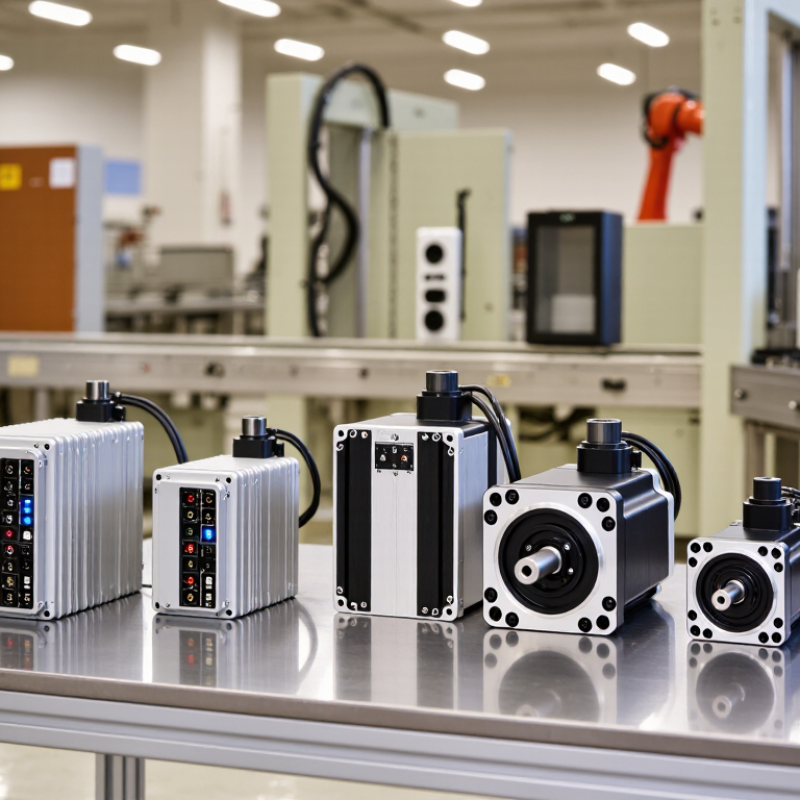
China’s BLDC drive manufacturers offer compact controllers, standalone drive units, and matched motor-and-controller kits. Product ranges vary, from low-voltage drives for small pumps and fans to higher-power systems for industrial equipment. Some units use Hall sensors or encoders for position feedback; others use sensorless control to reduce wiring. That trade-off matters.

Common control options include six-step commutation and field-oriented control, which can help improve low-speed smoothness and operating efficiency. Drive features may include adjustable acceleration, current limiting, temperature protection, and speed feedback. Communication interfaces such as UART, RS-485, or CAN are available on some models, but not across every product line. Check the datasheet.

For practical selection, compare rated voltage, continuous current, peak current, and cooling requirements against the actual motor and load. A controller that works well with a fan may struggle with repeated starts under a heavy load. Ask for test conditions, wiring diagrams, and measured performance data. Protection labels alone are not enough. Noise, heat, and startup behavior deserve a real trial; specifications can leave gaps.

How to Choose a BLDC Drive Manufacturer for Your Needs?

Choosing a BLDC drive manufacturer starts with your motor and its real operating conditions. Check rated voltage, continuous and peak current, speed range, and control method. A drive that works on a bench may overheat inside a sealed machine. Ask for thermal curves, efficiency data, and test conditions, not just headline specifications. Small details matter. Confirm whether the drive supports Hall sensors, encoder feedback, or sensorless startup, as your application requires. For a pump, low-speed torque may matter more than maximum speed. For a conveyor, acceleration and braking behavior can be decisive.

Assess engineering support as carefully as price. Ask how firmware changes, fault logs, and sample testing are handled. Request a sample and run it with your own motor, power supply, load, and wiring. Record startup behavior, noise, temperature rise, and response to sudden load changes. Good documentation should explain wiring, protection limits, and fault codes clearly. Review production consistency, component traceability, lead times, and after-sales response, too. A low quote can hide integration work. I would not choose from a catalog alone. Supplier data can look tidy while real installations are messy, so discuss expected volume and customization needs before approval.