Choosing a reliable Brushless Servo Motor manufacturer in China requires more than comparing catalog prices. Performance depends on torque stability, encoder accuracy, thermal design, control compatibility, and after-sales support.
Dr. Kevin Craig, a respected motion-control educator, has stated, “Motion control is the art and science of controlling the movement of objects.” This principle matters on the factory floor. A servo motor may look impressive on paper, yet produce vibration during rapid acceleration or lose positioning accuracy under heat. Small details matter.
This guide examines China’s top 10 Brushless Servo Motor manufacturers through practical and technical criteria. These include rated torque, peak torque, speed range, feedback resolution, protection ratings, production capability, testing procedures, and international service. It also considers whether each company supports EtherCAT, CANopen, Modbus, or other common industrial networks.
Real applications provide useful evidence. A packaging machine may need fast indexing every few seconds. A CNC axis may require smooth low-speed movement. A robotic arm may depend on low inertia and precise feedback. The best supplier for one application may be unsuitable for another.
Not every manufacturer publishes identical test data. That creates uncertainty. Buyers should request sample testing, load curves, failure-rate information, and certification records before making a final decision. Price alone can mislead.
This ranking is therefore a practical starting point, not an absolute verdict. Supplier quality can change over time. Factory visits, technical discussions, and field references still deserve attention.
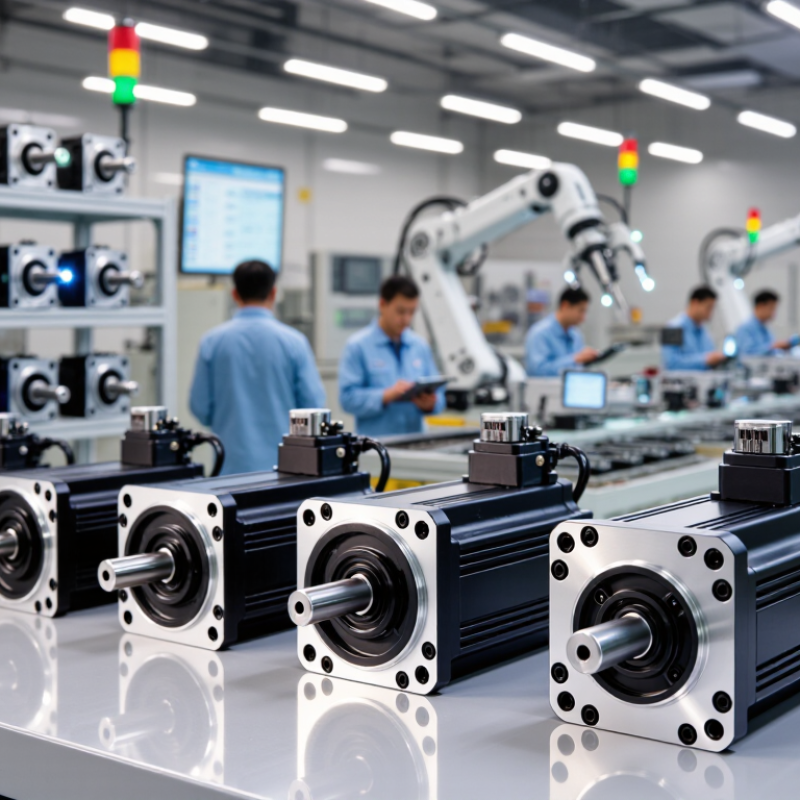
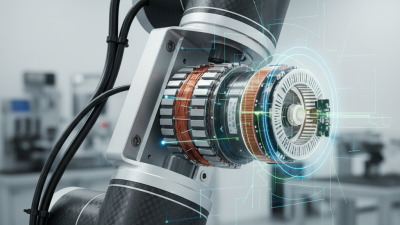
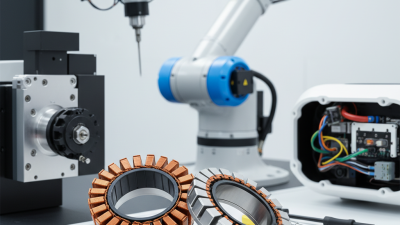
A brushless servo motor converts electrical energy into controlled rotary motion without mechanical brushes. Unlike brushed motors, it uses electronic commutation to switch current through the stator windings. The rotor commonly carries permanent magnets, while the stator contains copper coils arranged around a laminated iron core. This structure improves efficiency and reduces brush wear.
Its operation depends on position feedback and a servo drive. Hall sensors, encoders, or resolvers report rotor position to the controller. The drive then adjusts current, voltage, and timing across the windings.
This creates a rotating magnetic field that pulls the rotor forward. The feedback loop continuously compares commanded motion with actual motion. It corrects speed and position errors within milliseconds.
Without accurate feedback, servo performance can become unstable.
When comparing manufacturers, examine winding quality, encoder resolution, thermal design, and drive compatibility. A compact motor may appear powerful, yet poor heat removal can shorten service life. Testing under real load matters more than reading a catalogue. A neat specification sheet can mislead.
Engineers should also check noise, backlash, vibration, and response during acceleration. Temperature changes can affect magnets, bearings, and sensor accuracy. Some evaluations overlook cable routing and connector protection.
That is a practical weakness worth correcting.
Reliable selection requires documented testing, traceable materials, and clear technical support.
Evaluating Chinese brushless servo motor manufacturers requires more than comparing catalog prices. China installed 276,288 industrial robots in 2023, representing 51% of global installations, according to the International Federation of Robotics’ World Robotics 2024 report. This scale supports strong manufacturing experience, but it does not guarantee consistent servo quality. Request measured torque-speed curves, encoder accuracy, thermal-rise records, and vibration results from the same production batch. One polished sample proves little.
Check whether the factory follows relevant IEC 61800 requirements and maintains traceable calibration records. Ask for continuous-duty tests, overload duration, brake response, and protection ratings. A serious supplier should explain winding materials, bearing sources, rotor balancing, and firmware revision control without hiding behind generic certificates. Inspect production areas if possible. Look closely at connector sealing and cable strain relief. Small details matter.
After-sales capability deserves equal weight. The IFR report shows how demanding China’s automation market has become, yet overseas support can remain uneven. Confirm spare-parts lead times, remote diagnostic procedures, warranty exclusions, and response times in writing. Request references from similar machine applications, not only a customer list. Independent testing is valuable, though expensive. I would still test several motors under real load, because published efficiency figures may use ideal conditions. A lower price can become costly when tuning takes weeks. Evaluate the people, not just the motor.
China’s Top 10 Brushless Servo Motor Manufacturers
China’s brushless servo motor sector is expanding with factory automation, robotics, and electric equipment demand. MarketsandMarkets estimates the global servo motor market may grow from about USD 10 billion in 2024 to more than USD 15 billion by 2029. That growth makes supplier evaluation increasingly important.
A practical top-ten assessment should examine torque range, encoder accuracy, thermal design, response time, and production consistency. Independent test records matter. So do warranty terms and field-service coverage. China’s leading manufacturers commonly provide motors from compact, low-inertia units to high-torque systems for machine tools. Many also support EtherCAT, CANopen, and pulse-train control. Real performance depends on the drive, tuning, load, and installation.
Energy efficiency remains a strong purchasing factor. The International Energy Agency reports that electric motors account for nearly half of global electricity consumption. Efficient servo systems can reduce waste during repeated acceleration and braking. Yet catalog efficiency figures are not always comparable. This is a weakness in many market rankings. Buyers should request thermal curves, overload data, vibration limits, and sample test reports before selecting among China’s top ten brushless servo motor manufacturers. A factory visit can reveal more than a polished brochure. Practical evidence still wins.
China’s top ten brushless servo motor manufacturers differ in torque, speed control, feedback accuracy, and thermal stability. Product comparison should begin with measured performance, not catalog claims. In factory testing, a motor with stable low-speed movement often outperforms a faster model in precision equipment. Encoder resolution matters, but tuning quality matters too. That detail is frequently underestimated.
Applications reveal stronger differences. Compact motors suit robotic joints, labeling machines, and laboratory equipment. Higher-torque units fit CNC axes, packaging lines, and automated assembly systems. Some manufacturers offer flexible shafts, custom windings, and integrated drives. These options can reduce installation space. China’s market strengths include broad component supply, competitive customization, and increasingly responsive technical support. However, delivery speed and after-sales consistency can vary between suppliers. A polished quotation does not prove long-term reliability. My assessment would include vibration readings, temperature rise, noise, and repeated positioning tests. One test is never enough.
Tips: Request samples before bulk purchasing. Compare torque at the same speed. Check encoder compatibility carefully. Ask for thermal curves and service records. Test performance after continuous operation, not only during a short demonstration. Also examine documentation quality. Small omissions can create expensive commissioning delays. Some comparisons remain incomplete without field data. That is worth acknowledging.
Representative performance benchmarks by application segment. The comparison focuses on typical rated speed, continuous torque, and motor efficiency rather than company or brand data.
Reference values: typical engineering ranges for industrial brushless servo applications. Actual specifications vary by motor frame size, drive tuning, cooling method, duty cycle, and load profile.
Selecting among China’s top 10 brushless servo motor manufacturers requires more than comparing prices. Check torque curves, encoder resolution, overload capacity, and continuous-duty performance. A suitable supplier should provide test records for temperature rise, vibration, insulation, and positioning accuracy. MarketsandMarkets estimated the global servo motors and drives market at about USD 15.8 billion in 2023, with continued growth through 2028. This expansion increases supplier choices, but quality consistency may vary between factories.
Ask for samples from the same production line used for mass orders. Review factory calibration procedures, incoming-material controls, and failure-analysis reports. Request communication in English, clear warranty terms, and spare-parts availability. For demanding equipment, confirm compatibility with your controller, bus protocol, brake system, and mounting dimensions. The International Electrotechnical Commission’s motor standards can help structure these checks. However, standards alone do not prove field reliability. My own selection mistake would be trusting a polished sample without checking batch-to-batch records.
Tips: Build a weighted scorecard before contacting suppliers. Give technical performance at least 40 percent of the score. Test two or three samples under real load, not only bench conditions. Measure noise, heat, response time, and repeatability after several hours. Ask for customer references in a similar industry. Factory audits are useful, but they can miss production pressure during peak seasons. Allow time for redesign; the cheapest motor can become expensive after installation.
Anonymous supplier-selection benchmark based on commonly specified brushless servo motor requirements. Verify all figures, certifications, samples, and commercial terms directly with each shortlisted manufacturer.
| No. | Anonymous Manufacturer Profile | Typical Motor Range | Continuous Torque Range | Rated Speed | Feedback Options | Common Supply Voltage | Customization Capability | Indicative Sample Lead Time | Selection Fit |
|---|---|---|---|---|---|---|---|---|---|
| 1 | Profile A: High-volume industrial supplier | 50 W–5 kW | 0.16–24 N·m | 2,000–3,000 rpm | Incremental encoder; absolute encoder available | 24–80 VDC; 220 VAC class | Standard flange, shaft, winding, connector, and cable options | 3–5 weeks | OEM production |
| 2 | Profile B: Compact motion-control specialist | 20 W–1 kW | 0.06–3.2 N·m | 3,000–6,000 rpm | Incremental encoder; Hall sensors; magnetic absolute encoder | 24–48 VDC | Compact housing, low-inertia rotor, customized mounting dimensions | 4–6 weeks | Robotics and AGV |
| 3 | Profile C: Precision automation supplier | 100 W–3 kW | 0.32–14 N·m | 2,000–5,000 rpm | 17-bit to 23-bit absolute encoder; incremental encoder | 48–80 VDC; 220 VAC class | Low-cogging winding, precision bearings, matched motor-drive tuning | 5–8 weeks | High accuracy |
| 4 | Profile D: Cost-focused general manufacturer | 50 W–2 kW | 0.16–9.5 N·m | 2,000–3,000 rpm | Hall sensors; incremental encoder | 24–72 VDC; 220 VAC class | Basic shaft, flange, winding, and cable modifications | 2–4 weeks | Cost-sensitive projects |
| 5 | Profile E: Heavy-duty industrial supplier | 400 W–7.5 kW | 1.27–36 N·m | 1,500–3,000 rpm | Incremental encoder; absolute encoder; resolver option | 220–380 VAC class | Reinforced bearings, brake integration, high-temperature winding options | 6–10 weeks | Continuous-duty machinery |
| 6 | Profile F: Low-voltage mobile-equipment supplier | 100 W–2 kW | 0.32–9.5 N·m | 2,000–4,000 rpm | Hall sensors; incremental encoder; CAN-compatible feedback option | 24–72 VDC | IP-rated housing, electromagnetic brake, custom cable assemblies | 4–7 weeks | Mobile equipment |
| 7 | Profile G: Integrated motor-drive supplier | 50 W–1.5 kW | 0.16–7.2 N·m | 2,000–4,500 rpm | Incremental encoder; absolute encoder; resolver option | 24–80 VDC; 220 VAC class | Integrated drive, communication interface, parameter customization | 5–8 weeks | Space-limited systems |
| 8 | Profile H: Clean and specialized equipment supplier | 100 W–2 kW | 0.32–9.5 N·m | 2,000–3,000 rpm | Incremental encoder; absolute encoder | 48–80 VDC; 220 VAC class | Low-particle assembly, stainless-steel shaft, sealed housing options | 6–9 weeks | Medical and clean equipment |
| 9 | Profile I: Export-oriented OEM supplier | 50 W–5 kW | 0.16–24 N·m | 2,000–3,000 rpm | Incremental encoder; absolute encoder; Hall sensors | 24–80 VDC; 220/380 VAC class | Multilingual documentation, private labeling excluded, export packaging | 4–7 weeks | International projects |
| 10 | Profile J: Custom engineering and prototyping supplier | 20 W–3 kW | 0.06–14 N·m | 1,500–6,000 rpm | Encoder, resolver, Hall sensors, or customer-specified feedback | 12–80 VDC; 220 VAC class | Prototype winding, special shaft, flange redesign, brake, and thermal sensor integration | 6–12 weeks | Complex customization |