The 2026 market for frameless torque motors is becoming more demanding. Robotics, medical equipment, semiconductor tools, and precision automation require compact drive systems with stable torque and controlled heat. A reliable Frameless Torque Motor supplier must offer more than an attractive catalog specification.
This guide introduces leading suppliers through practical purchasing criteria. It considers continuous torque, peak torque, torque density, winding options, encoder compatibility, cooling methods, and mechanical integration. Product quality also depends on rotor balance, air-gap control, insulation performance, and production consistency. These details often appear minor. They can decide whether a motor performs smoothly inside a robotic joint.
Supplier experience matters. A capable manufacturer should provide clear drawings, test data, engineering support, sample availability, and traceable quality procedures. Factory audits, application discussions, and prototype testing can reveal weaknesses that marketing pages hide. Lead time and customization capability also deserve careful attention, especially for low-volume or highly specialized projects.
No single supplier fits every application. A motor designed for surgical positioning may not suit a high-speed industrial axis. That is easy to overlook. This comparison therefore avoids treating rankings as permanent facts. Pricing, regional service, certifications, and production capacity may change during 2026. Some supplier information may also require direct confirmation. Buyers should review current datasheets, request representative samples, and test performance under real load, temperature, and duty-cycle conditions before making a final decision.
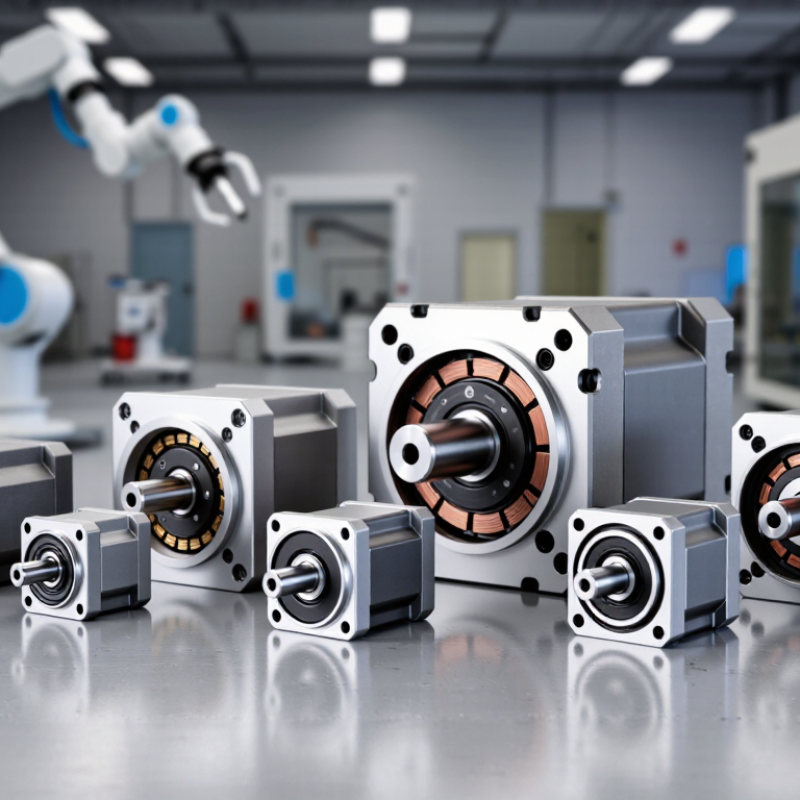
Frameless torque motors are brushless, direct-drive motor sets without a housing, shaft, or bearings. They usually contain a separate rotor and stator. The stator carries copper windings, while permanent magnets line the rotor. This open format lets engineers integrate the motor into robotic joints, rotary tables, medical mechanisms, and precision instruments. It also removes several mechanical parts that can create backlash, noise, or wear.
Operation is straightforward but not simple. A drive controller sends timed current through the stator windings. The resulting magnetic field pulls the rotor around its axis. Continuous torque comes from electronic commutation and accurate rotor-position feedback. An encoder is often essential for smooth motion and precise stopping. In practical projects, thermal paths matter as much as torque ratings. Heat may travel through the machine frame, so mounting materials and contact pressure deserve careful testing. My first sizing estimate is rarely perfect. Real duty cycles expose weaknesses quickly.
Tips: Ask suppliers for torque-speed curves, winding data, thermal resistance, and encoder compatibility. Check continuous torque, peak torque, voltage, and cooling conditions separately. Request measured test reports, not only catalog values. A supplier’s engineering response can reveal more than a polished datasheet. Confirm rotor balance and installation tolerances before approval. Small alignment errors can cause vibration. Even experienced teams sometimes underestimate cable routing and heat expansion.
In 2026, comparing frameless torque motor suppliers requires more than reading peak torque figures. In motion-system evaluations, I examine torque density, continuous output, rotor inertia, and thermal resistance. Thermal data matters. A motor may deliver impressive peak torque for seconds, yet overheat during a repetitive cycle. Ask for evidence. Reliable suppliers should provide test conditions, winding details, temperature limits, and measured torque-speed curves.
Mechanical integration also deserves careful attention. Check air-gap tolerances, rotor balance, axial load limits, and installation instructions. A small alignment error can increase vibration and reduce bearing life. Encoder compatibility is equally important, especially for direct-drive stages requiring precise positioning. Suppliers should explain feedback options, connector layouts, insulation ratings, and calibration procedures. The gap matters. Custom winding support can improve performance, but it may increase tooling costs and lead times.
Manufacturing reliability separates capable suppliers from attractive catalog listings. Review sample approval processes, inspection records, traceability, and production capacity. Ask whether final motors receive electrical and thermal testing before shipment. Engineering support matters when the application changes unexpectedly. I have seen projects fail because a supplier answered quickly but supplied vague data. No scorecard is perfect. A practical evaluation should include prototype quality, communication accuracy, delivery consistency, and corrective-action speed. It is also wise to test early samples under real load, not only laboratory conditions. Specifications can mislead. Supplier selection should reflect measured behavior, application risks, and the discipline shown during technical discussions.
| Performance Criterion | Relevant Technical Dimension | Typical Reference Range | What to Verify in Supplier Data | Suggested Weight |
|---|---|---|---|---|
| Continuous Torque | Thermal steady-state torque | Approximately 0.1–300 N·m, depending on frame size and cooling method | Torque at the stated winding temperature, ambient temperature, mounting condition, and cooling configuration | 20% |
| Peak Torque | Short-duration overload capability | Commonly 2–4 times the continuous torque rating for controlled short intervals | Peak duration, duty cycle, winding-current limit, demagnetization margin, and thermal recovery time | 12% |
| Torque Constant | Torque produced per ampere of current | Typically specified in N·m/A; value varies substantially with motor geometry | Whether the value is line-to-line or phase-based, RMS or peak current, and whether thermal conditions are defined | 10% |
| Maximum Speed | Permissible rotational speed | Approximately 500–10,000 rpm, depending on pole count, rotor design, bearing system, and balance | Speed rating with the specified rotor, air gap, balancing grade, bearing arrangement, and operating temperature | 10% |
| Torque Ripple | Periodic torque variation during rotation | Well-optimized direct-drive designs may achieve below 1–5% of rated torque | Measurement method, harmonic content, current-control conditions, encoder resolution, and mechanical tolerances | 10% |
| Cogging Torque | Detent torque caused by slot and magnet interaction | Low-cogging designs are often specified below 1–3% of rated torque | Peak-to-peak value, test position resolution, rotor configuration, and whether cogging compensation is included | 8% |
| Thermal Performance | Heat dissipation and winding temperature rise | Winding insulation systems commonly use Class F or Class H temperature ratings | Thermal resistance, allowable winding temperature, cooling interface, thermistor location, and continuous-duty test results | 10% |
| Mechanical Integration | Stator, rotor, air-gap, and mounting compatibility | Custom bore, shaft, flange, and housing configurations are widely available for frameless assemblies | Air-gap tolerance, radial and axial load limits, rotor inertia, runout, balancing requirements, and installation drawings | 8% |
| Positioning Compatibility | Feedback and motion-control integration | Compatible with Hall sensors, incremental encoders, absolute encoders, and resolver-based feedback systems | Electrical commutation method, sensor alignment procedure, encoder interface, servo bandwidth, and drive compatibility | 7% |
| Efficiency and Power Density | Output torque relative to motor mass and input power | Higher power density is generally associated with optimized magnetic circuits and effective thermal paths | Efficiency map, rated operating point, motor mass, rotor inertia, copper loss, iron loss, and cooling assumptions | 5% |
| Quality and Validation | Repeatability, inspection, and production controls | Key controls include winding tests, insulation tests, back-EMF checks, torque testing, and dimensional inspection | Test reports, calibration records, traceability, sample approval process, failure analysis, and change-control procedures | 5% |
| Lifecycle and Support | Availability, customization, and technical assistance | Evaluation should cover prototype support, production capacity, documentation quality, warranty terms, and lifecycle planning | Lead time, minimum order quantity, engineering response time, spare-unit policy, end-of-life notice, and application support | 5% |
Reference note: The ranges shown are general industry benchmarks for frameless permanent-magnet torque motors. Actual performance depends on frame size, winding, air gap, drive current, cooling method, duty cycle, and mechanical integration; supplier claims should be compared only when test conditions are equivalent.
Frameless torque motor suppliers are gaining attention as robots, medical tools, and inspection systems become smaller. Strong suppliers should offer more than a motor ring and a datasheet. They should provide measured torque constants, thermal limits, winding options, and clear integration drawings. In practical evaluations, engineers should examine hollow-shaft designs, low-cogging motion, and feedback compatibility. A motor that performs well on a bench may behave differently inside a crowded joint. That gap matters.
Suppliers worth watching will likely combine precise manufacturing with responsive technical support. Look for documented runout, bearing recommendations, insulation data, and repeatable test methods. Custom stators and rotors can solve unusual packaging problems, but customization may increase lead time. Ask for sample units before approving production quantities. Also review change-control policies, traceability, and after-sales response times. These details reveal maturity better than polished marketing language. Still, no supplier is perfect. Thermal models may need correction after real duty-cycle testing.
Tips: Compare continuous torque, peak torque, speed, and temperature under identical conditions. Request raw test curves, not selected headline values. Check rotor balance at the intended speed. Confirm encoder compatibility early. Keep tolerance allowances for mounting errors, cable routing, and heat transfer. A supplier that explains limitations openly may be more reliable than one promising everything.
Frameless torque motors support compact robotic joints, rotary tables, medical instruments, gimbals, and inspection equipment. Their separate rotor and stator allow engineers to design around shafts, bearings, and hollow passages. In practice, supplier quality depends on more than peak torque. Thermal behavior, cogging, feedback compatibility, and repeatability often decide the result. A capable supplier should provide measured torque curves, winding data, tolerance records, and realistic cooling guidance. Generic figures can mislead.
Customization becomes valuable when equipment has unusual space limits or demanding motion profiles. Suppliers may adjust winding resistance, pole design, rotor inertia, connector placement, and mechanical interfaces. They can also support matched encoders, liquid cooling jackets, and application-specific balancing. Ask for prototype testing under your actual duty cycle. Short tests are not enough. A motor may perform well for minutes, then lose precision after heat saturation. That weakness deserves attention, not polite approval.
Tips: Share the complete motion profile, including acceleration, dwell time, load inertia, and ambient temperature. Request samples with documented inspection results. Check whether the supplier supports engineering changes after testing. Confirm communication quality, because small design details can become expensive delays. Leave room for revision; the first design is rarely perfect.
How to Select the Right Frameless Torque Motor Supplier
Demand is rising with precision automation. The International Federation of Robotics reported 541,302 industrial robot installations in 2023, a 10% increase year over year. This growth increases pressure on motor suppliers. Do not choose by catalog torque alone. Compare continuous torque, peak torque, rotor inertia, winding options, and thermal resistance. Ask for measured curves, not optimistic estimates.
A capable supplier should explain how torque was tested. Request the test speed, ambient temperature, cooling method, and permissible winding temperature. Review encoder compatibility and mechanical tolerances before ordering samples. A 0.1 mm fit error can affect air-gap consistency and create uneven torque. That detail matters. MarketsandMarkets’ 2024 direct-drive motor analysis identifies robotics, semiconductor equipment, and factory automation as major demand sectors. These applications require repeatable performance, not only high headline output.
Supplier reliability also needs evidence. Check production traceability, inspection records, failure-analysis procedures, and replacement policies. Request sample data from the same winding configuration planned for volume production. A prototype may perform well, while later batches differ. This happens. Certification documents help, but they cannot replace technical dialogue. One weakness in this selection process is overvaluing delivery speed. Fast delivery is useful, yet poor thermal data can create expensive redesigns, noisy motion, and shortened bearing life. Choose the supplier that shares inconvenient measurements clearly.
This weighted scorecard is a practical supplier-selection framework. Technical fit receives the highest weight because continuous torque, peak torque, speed, winding options, and mechanical integration directly affect system performance. Customization, thermal behavior, feedback compatibility, quality control, delivery capability, and application support should also be reviewed before final qualification. The percentages represent evaluation priorities, not company or brand market-share data.