
Choosing a House Vacuum Cleaner is rarely just about suction power. Global buyers compare floor types, room sizes, voltage systems, noise limits, and maintenance habits. A cordless stick model may glide across a small apartment. A canister vacuum may better serve rugs, stairs, and long cleaning sessions. Robot cleaners can manage daily dust, while upright machines often provide strong carpet agitation. Each design solves a different household problem. None is perfect.
This guide introduces ten common House Vacuum Cleaner types through practical buying questions. It examines filtration, brush design, battery runtime, dust capacity, maneuverability, and repair access. Product specifications matter, but real use matters more. A machine that feels light in a showroom may feel tiring after twenty minutes. A quiet motor may still sound sharp on tile. Small details count.
For retailers, importers, and household users, reliable evaluation also includes voltage compatibility, warranty terms, replacement filters, and service availability. These details vary across markets, so buyers should confirm them with manufacturers or authorized sellers. Independent testing can help, although test conditions rarely match every home. That limitation deserves honesty. Some recommendations may need adjustment after real-world use. A pet-owning family may value sealed filtration, while a small office may prefer simple storage and low noise. Buyers should compare actual rooms, not imagined ones. Look beneath the marketing language. The best choice depends on flooring, pets, allergies, storage space, budget, and cleaning frequency. Then test the assumptions against your own needs.
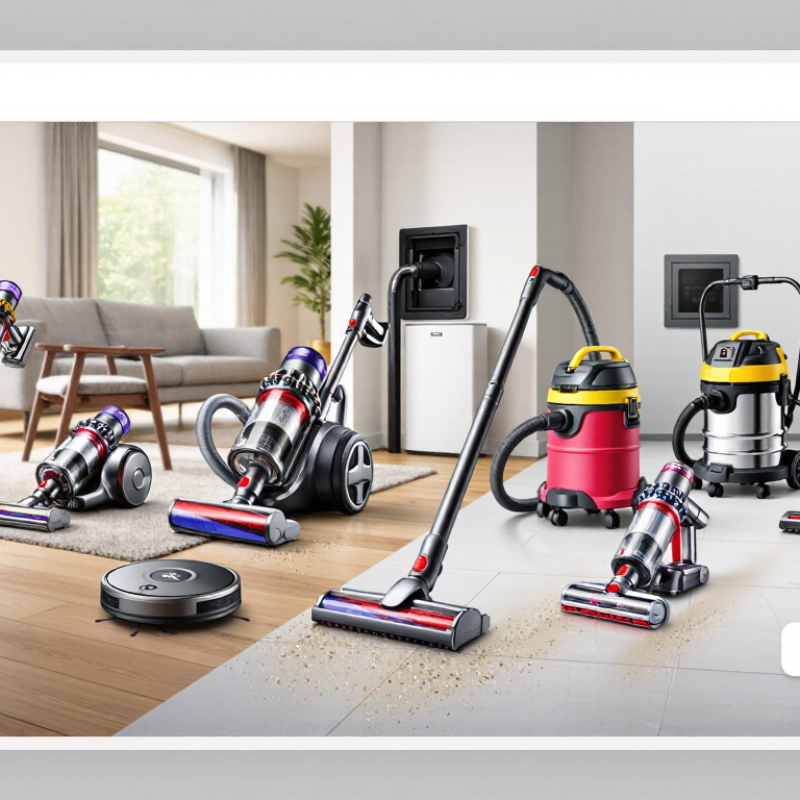
A house vacuum cleaner is an appliance that removes dust, hair, crumbs, and fine particles from indoor surfaces. It uses airflow, brushes, filters, and a collection chamber or bag. Classification usually begins with the machine’s structure. Upright cleaners suit large carpeted areas, while canister models offer better reach under furniture. Stick cleaners are lighter and convenient for daily spills. Handheld units work well on stairs, shelves, and car seats. Robot cleaners provide scheduled floor maintenance, but they may miss corners and tangled cables.
Vacuum cleaners can also be classified by cleaning method. Dry models collect ordinary household debris. Wet-and-dry models handle limited liquid recovery and heavier messes, but their tanks need careful cleaning. Central systems use fixed pipes inside a building, reducing indoor machine noise. Filtration creates another category. Standard filters serve general cleaning, while sealed high-efficiency systems help reduce fine airborne particles. No type is perfect. A powerful motor can still perform poorly with a blocked brush or leaking seal.
Tips: Check floor materials before choosing a machine. Soft rollers may protect hard floors better than stiff bristles. Measure storage space, hose length, and stair access. Empty the dust container before airflow weakens. Wash reusable filters only as instructed, then dry them completely. A smaller cleaner used regularly may outperform a larger model left in a closet. That detail is easy to overlook.
Choosing among the top ten house vacuum cleaner types depends on flooring, room size, and cleaning habits. Upright vacuums suit carpets and strong weekly cleaning. Canister vacuums offer flexible hoses for stairs, curtains, and hard floors. Stick vacuums are light and convenient for quick daily passes. Handheld vacuums target crumbs, shelves, and sofa corners. Robot vacuums provide scheduled floor cleaning, though they may miss edges. Wet-dry vacuums handle liquid spills and heavier messes, but require careful maintenance. Central vacuums offer quiet room cleaning with powerful wall-mounted systems. Backpack vacuums improve mobility in large homes, although comfort varies. Mattress vacuums focus on fabric surfaces and fine dust. Steam vacuum systems combine heat and suction, but they need suitable flooring.
Tips: Check suction control, filtration, noise, battery life, and replacement parts before buying. Measure storage space too. A powerful cleaner is not always the best choice. Thick rugs may resist lightweight models, while delicate wood can suffer from excessive moisture. In practical use, washable filters reduce long-term waste, but only when dried completely. Wet-dry machines can smell unpleasant after poor cleaning. That detail matters.
The right type should match real routines, not advertising claims. Families with pets may value sealed filtration and tangle-resistant brushes. Small apartments often benefit from a compact stick or robot model. Large houses may justify a canister or central system. I would still question automatic cleaning alone; corners and stairs need human attention. Performance can change with blocked filters, worn brushes, or unsuitable attachments. Check those parts before judging the machine.
Top 10 House Vacuum Cleaner Types for Global Buyers
How Does Each Vacuum Cleaner Type Work?
An upright vacuum uses a motorized brush roll to lift embedded carpet dust. Its head usually combines suction and agitation. A canister vacuum separates the motor from the cleaning head. A flexible hose then carries dirt into the container. Stick vacuums use a slim body and often a rechargeable battery. They suit quick crumbs, but battery life can limit deep cleaning.
Handheld vacuums use compact motors for stairs, cars, and sofa seams. Robot vacuums combine sensors, wheels, brushes, and programmed suction. Some map rooms, while others follow simpler patterns. Wet-dry cleaners collect dry debris and liquid through separate airflow paths. Central vacuum systems pull dirt through wall pipes toward a remote power unit. Backpack vacuums spread weight across the shoulders. They help when cleaning large areas or narrow stairways. Drum vacuums use strong airflow for workshops, garages, and heavier debris. Mattress cleaners often add vibration and fine filtration to remove surface particles.
Tips: Match the cleaner to your floor, dust level, and storage space. Check filter access before buying. A washable filter can reduce recurring costs, but it still needs complete drying. Emptying a small bin is frequent work. Robot cleaners may miss corners. Even strong suction cannot replace careful brushing on thick rugs. I have found that convenience sometimes wins over raw power, though this choice deserves honest reconsideration. Always follow the instruction manual and verify local electrical compatibility.
How does each vacuum cleaner type work?
The chart compares typical rated motor input power for ten common household vacuum cleaner types. Values are representative midpoints derived from commonly published household specifications and should not be interpreted as suction power. Upright, canister, wet-dry, extractor, and steam systems generally use larger motors, while robot and handheld models prioritize compact size and lower energy consumption.
Choosing among ten common types starts with the floor, not the advertisement. Upright models suit wall-to-wall carpet and strong weekly cleaning. Canister vacuums move easily around furniture and work well on mixed floors. Stick models are lighter for daily crumbs, stairs, and small apartments. Robot vacuums maintain open rooms, but they still miss corners and cables. Handheld units target sofas, car seats, and sudden spills. Wet-dry machines handle hard-floor liquid messes, yet they need careful tank cleaning. Central systems, backpack units, mattress vacuums, and compact commercial models fit specialist homes or heavier routines.
Indoor air matters too. The U.S. Environmental Protection Agency says true HEPA filtration can capture at least 99.97% of 0.3-micron particles under test conditions. That figure is useful, but it does not prove whole-machine performance. Check sealed filtration, exhaust design, noise, bag availability, and local voltage. A 2023 Grand View Research report valued the global vacuum cleaner market at about USD 11.9 billion in 2022, with growth forecast through 2030. More choices do not guarantee a better match.
Tips:
Measure storage space and check floor samples before buying. Choose a powered brush for embedded carpet hair. Select soft rollers for delicate hard floors. For allergy-sensitive rooms, verify independent filtration testing. My practical mistake was prioritising suction alone. It created a loud machine that rarely left the closet. A smaller vacuum used often may clean better in real life.
Choosing among upright, canister, stick, robot, handheld, wet-dry, central, backpack, cylinder, and mattress vacuums starts with the home, not the advertisement. Fortune Business Insights valued the global vacuum cleaner market at $44.12 billion in 2023. Its market report forecasts $75.68 billion by 2032. More choice does not guarantee better cleaning. Measure floor types, rugs, stairs, pet hair, storage, and cleaning frequency. A heavy upright may excel on carpet, while a light stick suits quick daily passes. Robots need clear routes and reliable mapping.
Global buyers should verify voltage, frequency, plug format, and local warranty support before payment. A cheap adapter cannot correct incompatible voltage. Check IEC 60335-2-2 conformity or equivalent national certification. Look for sealed filtration, washable parts, available bags, and replaceable batteries. HEPA claims also need scrutiny. Does the claim cover the whole machine or only the filter? Noise matters in apartments. Published decibel figures use different test conditions.
The U.S. Environmental Protection Agency’s indoor-air guidance emphasizes source control and filtration. Vacuum choice should match dust sensitivity. Suction power alone is a weak comparison. Airflow, brush design, seals, and floor contact work together. I have found that convenience often beats peak laboratory performance. That advice is imperfect. A robot may miss corners. A corded canister may feel old-fashioned. Still, repair access and realistic battery runtime usually matter more than a long feature list.
| Vacuum Cleaner Type | Best Suited For | Power or Energy Source | Typical Runtime or Operating Range | Dust or Liquid Capacity | Filtration Options | Typical Weight | Main Advantages | Main Limitations | Key Global-Buyer Considerations |
|---|---|---|---|---|---|---|---|---|---|
| Bagged Upright Vacuum | Large carpeted areas, homes with pets, and allergy-sensitive households | Usually corded; commonly sold in regional voltage versions | Continuous operation while connected; practical cleaning radius is often about 8–12 m | Disposable bag commonly holds about 3–5 L | Multi-stage filtration; some models use sealed HEPA-class filtration | Approximately 6–10 kg | Strong carpet agitation, large capacity, and hygienic dust disposal | Heavier, less compact, and requires replacement bags | Check local bag availability, plug type, voltage, frequency, cord length, and certified filtration claims |
| Bagless Upright Vacuum | Mixed floors, medium-to-large homes, and frequent carpet cleaning | Usually corded; motor rating varies by market and regulation | Continuous operation while connected; typically supports a large cleaning radius | Dust cup commonly holds about 1.5–3 L | Washable pre-filter plus fine-particle or HEPA-class filter on some models | Approximately 5–9 kg | No recurring bag cost, strong floor-head performance, and visible dust capacity | Emptying can release dust; filters require regular cleaning or replacement | Confirm dust-cup sealing, filter replacement access, local electrical compliance, and floor-head compatibility |
| Corded Stick Vacuum | Apartments, hard floors, quick daily cleaning, and limited storage spaces | Mains-powered through a power cord | Continuous operation; usually designed for a smaller cleaning radius than uprights | Commonly about 0.5–1.5 L | Washable foam or pleated filters; advanced versions may include sealed fine-particle filtration | Approximately 2–4 kg | Lightweight, easy to store, and avoids battery replacement concerns | Less convenient around stairs and furniture; cord management is required | Verify voltage, frequency, plug standard, cord length, noise level, and availability of replacement filters |
| Cordless Stick Vacuum | Fast daily cleaning, hard floors, stairs, and homes needing flexible movement | Rechargeable lithium-ion battery | Typically about 20–60 minutes, depending on power mode and attachments | Commonly about 0.3–0.8 L | Washable pre-filter and fine-particle filter; some models offer sealed high-efficiency filtration | Approximately 2–4 kg | Portable, convenient, and easy to use for spot cleaning | Limited runtime, smaller dust cup, and performance may drop in maximum-power mode | Compare battery voltage, charging time, replaceable-battery design, spare-part access, and charger compatibility |
| Canister Vacuum | Hard floors, stairs, curtains, furniture, and homes with varied surfaces | Usually corded; available in bagged and bagless formats | Continuous operation while connected; hose and wand provide extended reach | Bagged versions commonly hold about 2.5–4.5 L; bagless versions often hold about 1–2 L | Options range from standard filters to sealed high-efficiency systems | Approximately 4–8 kg for the main unit | Flexible hose, good reach, maneuverability, and versatile attachments | Separate hose-and-body design requires more storage space | Check accessory availability, hose durability, wheel design, voltage, plug type, and replacement consumables |
| Robot Vacuum | Routine maintenance cleaning on hard floors and low-pile carpets | Rechargeable battery with automatic docking station | Often about 60–180 minutes per charge, depending on mode and floor conditions | Commonly about 0.3–0.7 L; some docking stations support larger automatic-emptying bags | Usually a washable pre-filter and fine-particle filter | Approximately 2.5–5 kg | Automated scheduling, low daily effort, and access under some furniture | Smaller capacity, slower cleaning, and limited performance on thick carpets or cluttered spaces | Check room-mapping technology, regional app support, Wi-Fi requirements, replacement parts, thresholds, and docking voltage |
| Handheld Vacuum | Furniture, cars, stairs, spills, and small localized cleaning tasks | Battery-powered or corded, depending on model | Battery models commonly run for about 10–30 minutes | Commonly about 0.1–0.5 L | Usually washable mesh, foam, or pleated filters | Approximately 0.7–2.5 kg | Compact, portable, and convenient for quick cleanups | Short runtime, limited capacity, and generally unsuitable for whole-home cleaning | Confirm battery replacement policy, charging method, crevice tools, filter availability, and regional electrical certification |
| Wet-and-Dry Vacuum | Garages, workshops, utility rooms, renovation debris, and liquid spills | Usually corded; some compact models are battery-powered | Continuous operation for corded models; duty cycle varies by motor and tank design | Commonly about 10–30 L, with separate or shared liquid collection systems | Foam filters for liquids and cartridge or fine-particle filters for dry debris | Approximately 5–15 kg, excluding accessories | Handles both dry debris and non-flammable liquids; generally durable | Bulkier and noisier than household vacuums; not all models are suitable for fine dust | Check liquid shutoff protection, grounding requirements, wet/dry filter rules, hose diameter, and local safety standards |
| Central Vacuum System | New construction or major renovations in larger homes | Fixed mains-powered motor connected to installed pipework | Continuous operation while connected; installation determines outlet coverage | Central canister or bag commonly holds about 15–25 L | Bagged, cyclonic, or cartridge filtration depending on system design | Wall-mounted unit; weight commonly about 8–20 kg | Low indoor motor noise, large capacity, and convenient whole-home coverage | High installation cost, permanent pipework, and limited portability | Confirm regional voltage, pipe diameter, inlet compatibility, installation standards, service access, and replacement bag supply |
| Backpack Vacuum | Large homes, stairs, narrow spaces, and commercial-style high-mobility cleaning | Usually corded; battery versions are also available | Continuous operation for corded models; battery versions commonly run about 30–90 minutes | Commonly about 4–10 L | Multi-stage filtration, often with a fine-particle or HEPA-class option | Approximately 4–8 kg including the main unit | Hands-free movement, good reach, and efficient cleaning in congested areas | Can cause user fatigue; requires correct harness adjustment and cord management | Evaluate ergonomic design, airflow and noise, shoulder-belt adjustment, voltage, plug type, and local occupational-safety requirements |
