10 Best BLDC Servo Motors for Global Buyers?

Choosing the right Bldc Servo motor is rarely a simple matter of comparing rated torque. Global buyers must examine the complete motion system. That system includes the motor, drive, encoder, gearbox, cabling, and controller.

Dr. R. Krishnan, a respected motor-drive researcher and author, offers a useful engineering reminder: “A motor is only as good as the drive, feedback, and load it serves.” This principle matters when machines operate continuously, across different factories, climates, and maintenance conditions. A motor that performs well on a test bench may struggle beside a hot stamping press.

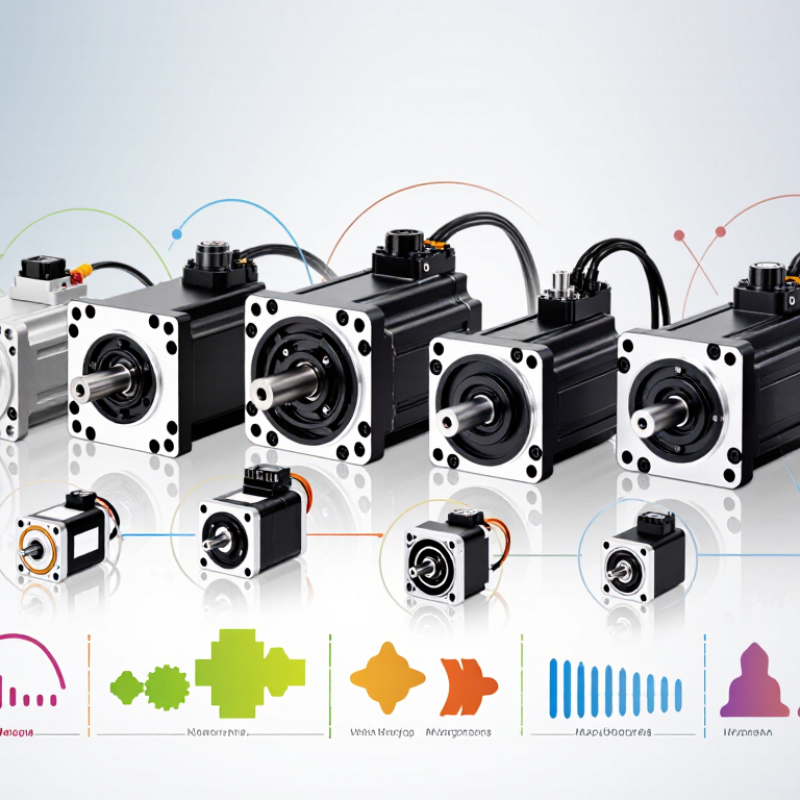
This guide examines ten Bldc Servo motors for international purchasing decisions. Each option deserves attention for torque density, speed range, feedback accuracy, thermal management, protection rating, and commissioning support. Supply voltage also matters. So do connector standards, replacement availability, and regional technical service.

Small details become expensive quickly. A poorly matched encoder can create positioning errors. An undersized cable can produce voltage drop and unwanted heat. An attractive price may conceal limited documentation or long delivery times. Buyers should request verified curves, not only catalog promises.

No shortlist is flawless. Some motors offer excellent precision but limited customization. Others deliver strong torque but require a more capable drive. We may also overvalue peak performance and underestimate daily thermal stress.

The ten selections ahead are intended as a practical starting point, not a universal verdict. Compare them against the actual load, duty cycle, environment, and service network. That careful comparison often separates a reliable Bldc Servo installation from an expensive experiment.
10 Best BLDC Servo Motors for Global Buyers?

What Is a BLDC Servo Motor and How Does It Work?

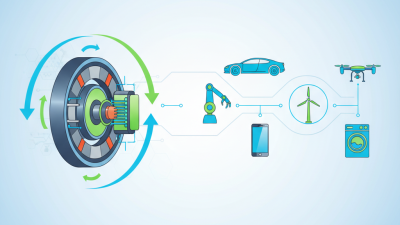
A BLDC servo motor combines a brushless DC motor with feedback and closed-loop control. Permanent magnets sit on the rotor, while energized stator windings create a rotating magnetic field. Electronic commutation replaces mechanical brushes, reducing wear and improving high-speed operation.

The controller reads an encoder or Hall sensors, then adjusts current through pulse-width modulation. It constantly compares commanded position with actual position. This allows accurate positioning, speed regulation, and torque control. It is feedback-driven. Field-oriented control can also smooth torque and reduce vibration, especially during low-speed movement.

Industry data supports growing demand. Grand View Research valued the global brushless DC motor market at about USD 21 billion in 2023 and projects continued growth through 2030. The report links expansion to automation, electric mobility, and energy-efficient equipment. For global buyers, selection should include rated torque, peak torque, encoder resolution, duty cycle, voltage compatibility, thermal limits, and regional certification requirements. A motor rated for continuous operation may still overheat during repeated acceleration. That assumption can fail. Cable shielding and grounding also matter near inverters, where electrical noise can corrupt feedback signals. In practical testing, observe hunting, overshoot, acoustic noise, and temperature after the real load reaches its operating cycle. A compact motor may look efficient on paper, yet its gearbox, drive, and installation environment can change the result. (Sources: Grand View Research, Brushless DC Motors Market Report, 2024; IEC 61800-5-2.)

Key Specifications for Comparing BLDC Servo Motors

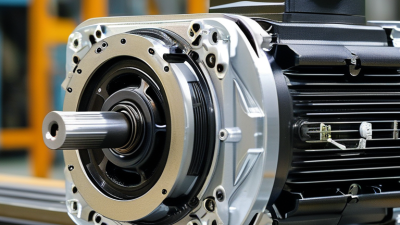
When comparing the 10 best BLDC servo motors for global buyers, start with measurable specifications. Continuous torque shows what the motor can sustain without overheating. Peak torque indicates short acceleration capacity. Torque alone misleads. Check the peak duration and duty cycle.

Rated speed, maximum speed, and supply voltage must match the machine’s drive system. A motor may reach impressive speed at no load, yet slow sharply during cutting or lifting. Examine torque curves at the actual operating voltage. Also compare rotor inertia with load inertia, because poor matching can create vibration and long settling times.

Feedback quality deserves equal attention. Encoder resolution, feedback type, and control-loop bandwidth affect positioning accuracy and response. In practical commissioning, cable length, connector protection, thermal sensors, shaft load, and mounting dimensions often cause unexpected delays. Confirm the motor’s protection rating for dust, moisture, and cleaning conditions. A compact frame is useful, but limited cooling may reduce continuous output.

Review the torque constant, back EMF, overload capacity, and regenerative braking requirements. Datasheets sometimes present ideal laboratory values. Test under load. Ask for tolerances, noise data, and performance conditions before comparing prices. I have seen projects select motors by peak torque alone, then discover overheating during repeated cycles. That mistake is avoidable, though real machines rarely behave perfectly. Leave a reasonable margin for friction, temperature changes, and future process adjustments.

Top 10 BLDC Servo Motors for Global Buyers

Top 10 BLDC Servo Motors for Global Buyers

The top 10 BLDC servo motors for global buyers should be judged by application, not advertising claims. In practical commissioning, I compare continuous torque, peak torque, speed range, encoder resolution, thermal behavior, and service access. The strongest options usually include low-inertia motors, high-torque models, frameless units, integrated servo motors, compact machines, IP65-rated motors, water-resistant versions, high-speed types, robotic joints, and precision positioning motors. Each design serves a different load profile.

MarketsandMarkets estimates that the global servo motor and drive market may grow from about USD 13 billion in 2024 to more than USD 18 billion by 2029. The U.S. Department of Energy also reports that motor-driven systems consume over half of industrial electricity in many facilities. Efficiency matters. However, a larger motor is not always better. Oversizing can increase inertia, tuning difficulty, and purchase cost. No ranking is perfect; machine duty cycles often change the result.

Tips: Check the encoder protocol, supply voltage, braking method, ingress protection, and regional compliance documents. Confirm replacement availability before ordering. Ask for thermal curves, not only rated torque. A short test with the real gearbox and load can reveal vibration, noise, and unexpected heating. I would also review connector standards carefully. Small mismatches create expensive delays.

10 Best BLDC Servo Motors for Global Buyers

Representative comparison of BLDC servo motor classes using typical continuous torque and rated speed ranges found in international industrial automation applications. Actual performance varies by winding, encoder, drive, and cooling method.

How to Match a BLDC Servo Motor to Your Application

10 Best BLDC Servo Motors for Global Buyers?

How to Match a BLDC Servo Motor to Your Application

Selecting a BLDC servo motor starts with the machine, not the catalog. Define continuous torque, peak torque, speed, acceleration, and duty cycle. A motor that reaches the required speed may still overheat during repeated indexing. Check the torque-speed curve at your actual supply voltage. Leave practical headroom, but avoid excessive oversizing. It can reduce efficiency and increase cost. Load inertia also matters. Keep the motor-to-load inertia ratio within the drive manufacturer’s recommended range. Fast motion needs stronger acceleration capability, while conveyors often prioritize steady torque.

Feedback selection deserves careful attention. Incremental encoders suit many cost-sensitive systems, while absolute feedback can simplify position recovery after power loss. Confirm resolution, communication compatibility, shaft dimensions, mounting holes, and brake requirements. Thermal conditions are easy to underestimate. Measure the temperature near the motor housing, especially inside a compact cabinet. IP ratings should match dust, moisture, and cleaning conditions, not marketing expectations. A perfect match is rare. Recheck assumptions after testing.

Tips: Build a short comparison sheet for ten candidate motors. Record rated torque, peak torque, speed, voltage, encoder type, protection rating, and available documentation. Ask for test data at your intended load. Verify EMC, safety, and installation requirements for the destination market. Do not rely on peak torque alone. Real performance depends on the drive, tuning, wiring, and mechanical stiffness. Allow time for tuning. It is often overlooked.

10 Best BLDC Servo Motors for Global Buyers? - How to Match a BLDC Servo Motor to Your Application

No. Recommended Motor Configuration Typical Rated Power Rated Voltage Continuous Torque Peak Torque Rated Speed Feedback Option Protection / Cooling Best Application Match
1 Compact low-inertia BLDC servo 50–100 W 24–48 VDC 0.16–0.32 N·m 0.48–0.96 N·m 3,000 rpm Hall sensors or incremental encoder IP40–IP54; natural cooling Small actuators, laboratory equipment, compact automation
2 High-speed precision BLDC servo 200–400 W 48–72 VDC 0.64–1.27 N·m 1.9–3.8 N·m 4,000–6,000 rpm 17-bit to 23-bit absolute encoder IP54–IP65; fan or frame cooling Pick-and-place systems, inspection stages, light CNC axes
3 General-purpose 400 W servo 400 W 220 VAC drive bus 1.27 N·m 3.8 N·m 3,000 rpm Incremental or serial absolute encoder IP65; natural or forced cooling Conveyors, labeling machines, packaging equipment
4 Medium-torque 750 W servo 750 W 220 VAC drive bus 2.39 N·m 7.2 N·m 3,000 rpm 20-bit incremental or absolute encoder IP65; frame cooling Material handling, forming machines, automatic doors
5 Low-speed high-torque servo 750 W–1 kW 48–96 VDC 4.8–6.4 N·m 14–19 N·m 1,500–2,000 rpm Incremental encoder or resolver IP65; forced-air cooling recommended AGV wheels, lifting mechanisms, rotary tables
6 High-duty 1.5 kW servo 1.5 kW 220 VAC drive bus 4.8 N·m 14.4 N·m 3,000 rpm 17-bit to 23-bit absolute encoder IP65; forced-air or frame cooling Robotic joints, screw drives, textile and printing machinery
7 Continuous-duty 2 kW servo 2 kW 220 VAC drive bus 6.4 N·m 19.2 N·m 3,000 rpm High-resolution serial encoder IP65; forced-air cooling CNC feed axes, indexing systems, industrial pumps
8 High-inertia 3 kW servo 3 kW 220–400 VAC drive bus 9.55 N·m 28.7 N·m 3,000 rpm Absolute encoder with electronic commutation IP65; forced-air cooling Large conveyors, winding equipment, industrial automation
9 Washdown-rated BLDC servo 400 W–1.5 kW 48 VDC or 220 VAC drive bus 1.3–4.8 N·m 3.9–14.4 N·m 2,000–3,000 rpm Sealed absolute encoder IP66–IP67; stainless housing option Food-processing conveyors, pharmaceutical machinery, washdown lines
10 Integrated servo actuator 100–750 W 24–60 VDC 0.32–2.4 N·m 0.96–7.2 N·m 1,500–4,000 rpm Integrated encoder and drive electronics IP54–IP65; natural or forced cooling Collaborative robots, AGVs, compact machine modules, mobile equipment

Selection note: Torque values are calculated from typical continuous power and speed ratings using T = 9550 × P(kW) ÷ n(rpm). Actual performance depends on winding design, drive current, duty cycle, cooling, encoder resolution, load inertia, and operating environment.

Global Purchasing, Compatibility, and Support Considerations

10 Best BLDC Servo Motors for Global Buyers?

Global buyers need more than impressive torque ratings when selecting BLDC servo motors. The best choice must match the machine, control system, and service environment. Start with continuous torque, peak torque, speed range, encoder resolution, and thermal limits. Ask for verified curves, not only catalog values. A small mismatch matters.

Compatibility deserves careful checking. Confirm motor voltage, winding connection, shaft dimensions, brake options, feedback type, and amplifier requirements. Communication support may include EtherCAT, CANopen, or another industrial protocol. Connector pinouts can differ between production batches, so request current drawings before ordering. Check regional power conditions and available replacement parts. This prevents expensive rewiring later.

Support often decides whether a motor performs well after delivery. Reliable suppliers should provide manuals, parameter files, inspection records, and clear commissioning guidance. Ask how quickly engineers respond across time zones. Spare encoder cables and bearings should be available locally when possible. I once trusted a neat comparison sheet and overlooked the mounting tolerance. That mistake was avoidable. Buyers should also request sample units for vibration, heat, noise, and repeated positioning tests.

Ten motors may look equal online, but their documentation, testing discipline, and after-sales support can be very different.