Top Brushless Servo Motor Suppliers for Global Buyers?
Global buyers are entering a more demanding motion-control market. In 2023, manufacturers installed 541,302 industrial robots worldwide, according to the International Federation of Robotics’ World Robotics 2024 report. Many of these systems depend on compact, responsive servo platforms. Brushless Servo motors support precise positioning, rapid acceleration, and lower maintenance in robots, packaging lines, medical equipment, and automated assembly.
The market is expanding, but supplier selection is rarely simple. MarketsandMarkets estimates that the global servo motors and drives market will grow from approximately USD 15.8 billion in 2024 to USD 20.9 billion by 2029. Figures differ between reports. Definitions differ too. Buyers should check whether each supplier includes drives, controllers, encoders, and integrated systems.
R. Krishnan, a respected motor-drive researcher and author of Electric Motor Drives, describes the technology as “a permanent-magnet synchronous motor.” That definition highlights an important purchasing issue: motor performance depends on the complete control system, not only the motor body. A polished catalogue can still hide weak feedback accuracy, limited thermal data, or poor service coverage.
Real-world experience matters. A 400-watt motor may perform well on a clean laboratory bench, yet struggle beside hot gearboxes and dusty conveyors. Top suppliers should therefore demonstrate torque curves, encoder resolution, overload capacity, firmware support, and regional repair capability. Certification and documentation matter as well.
No ranking fits every buyer. A robotics integrator may value bandwidth and tuning tools, while a packaging manufacturer may prioritise washdown protection and delivery stability. This guide compares leading Brushless Servo motor suppliers through performance, application fit, technical support, and global reliability. Some comparisons remain imperfect. That is worth admitting.
What Is a Brushless Servo Motor and How Does It Work?
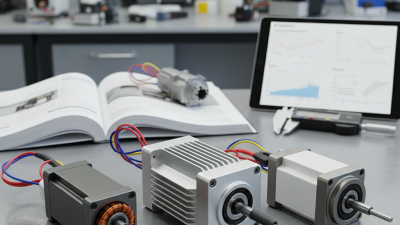
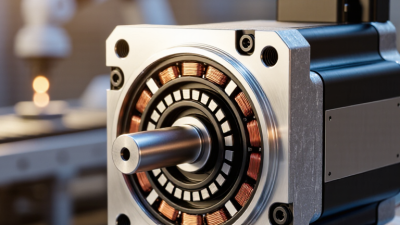
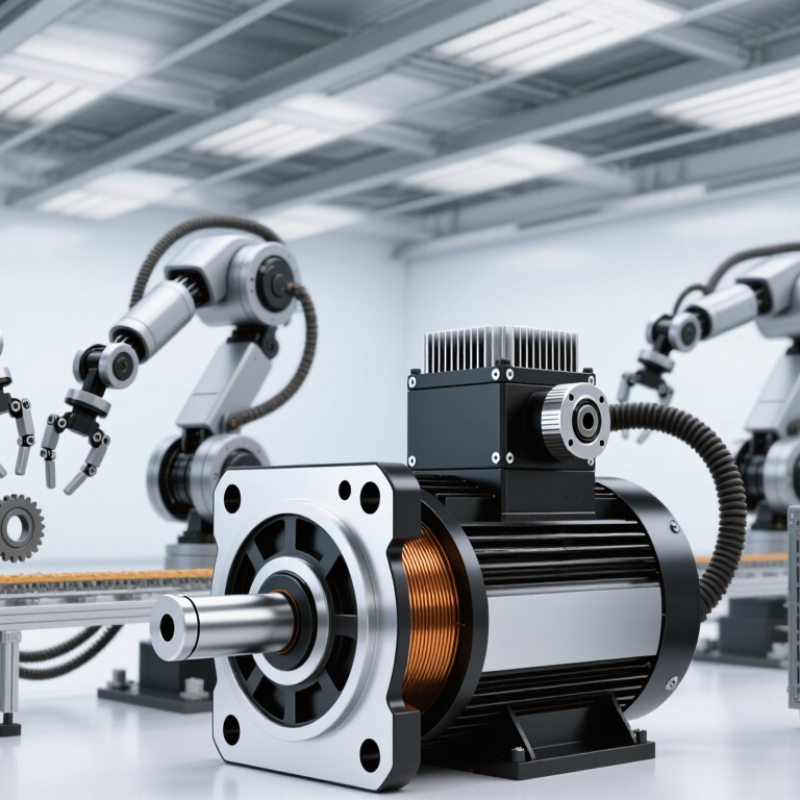
A brushless servo motor is an electric motor designed for precise motion control. It uses permanent magnets on the rotor and coils on the stator. Electronic switching replaces mechanical brushes and a commutator. That distinction matters. The design reduces brush wear, electrical sparking, and routine maintenance. In factories, it can move a machine shaft smoothly while controlling position, speed, and torque.
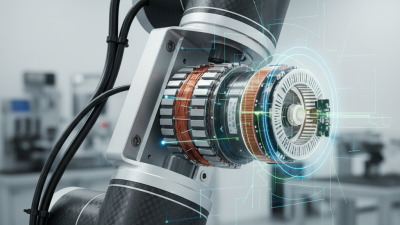
The working process depends on closed-loop feedback. A drive sends controlled current through the stator windings. The changing magnetic field pulls the rotor around. An encoder reports the rotor’s position to the controller. The controller compares that signal with the target command. It then adjusts current within milliseconds. Position is the priority. This constant correction helps the motor handle acceleration, stopping, and changing loads. Poor tuning can still cause vibration, noise, or overshoot.
For global buyers, the motor should match the application rather than only the catalog rating. Check continuous torque, peak torque, encoder resolution, voltage, protection rating, and thermal limits. Ask whether the supplier provides test data, wiring diagrams, installation guidance, and replacement feedback devices. A motor can look powerful on paper but perform poorly with an undersized drive. Real loads vary. Dust, heat, long cables, and frequent starts also affect reliability. Field testing often reveals issues that specifications miss. Engineers should leave a practical safety margin, though excessive sizing can waste energy and reduce response quality.
Key Specifications Global Buyers Should Compare
Top Brushless Servo Motor Suppliers for Global Buyers?
Key Specifications Global Buyers Should Compare
Choosing a brushless servo motor supplier requires more than comparing catalog prices. Global buyers should match rated torque, peak torque, speed range, and continuous operating time with the machine’s real workload. A motor rated for 3 Nm may perform poorly if the application demands frequent acceleration. Check the torque-speed curve, not only the headline rating. Small details matter.
Voltage compatibility is equally important. Confirm the required DC bus or AC input range, phase configuration, and controller matching. Feedback devices deserve careful review. Incremental encoders can suit basic positioning, while absolute encoders provide stronger position awareness after power loss. Ask about resolution, repeatability, communication protocols, and encoder cable length. Do not assume higher resolution always improves the finished machine.
Thermal performance often separates a dependable motor from a disappointing one. Compare insulation class, allowable winding temperature, cooling method, duty cycle, and overload duration. In dusty or humid environments, inspect the IP rating and connector protection. Mechanical specifications also need attention, including shaft dimensions, radial loads, bearing life, brake options, and permitted backlash. I have seen projects fail because the selected motor fit the drawing but not the actual mounting stress. Supplier evaluation should include sample testing, clear datasheets, production traceability, warranty terms, and responsive technical support. Certification documents help, but practical test records are more convincing. My own selection process still needs revision sometimes. Manufacturer claims require verification under your load, temperature, and control settings.
Leading Brushless Servo Motor Suppliers by Market Focus
Global buyers should compare brushless servo motor suppliers by market focus, not catalog size. Factory automation suppliers usually prioritize continuous duty, precise positioning, and EtherCAT or PROFINET compatibility. Packaging-focused suppliers often emphasize rapid acceleration, compact frames, and easy washdown protection. Their motors may face thousands of indexing cycles each day.
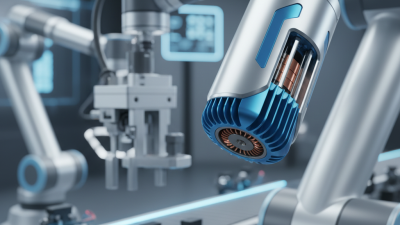
Robotics suppliers typically develop high torque-to-weight ratios and low backlash control. Semiconductor equipment suppliers focus on vibration control, thermal stability, and cleanroom-compatible materials. Medical equipment suppliers need quiet operation, traceable quality records, and dependable low-speed control. These requirements create very different supplier strengths.
The International Federation of Robotics reported 541,302 industrial robots installed globally in 2023. That figure supports continued demand for compact, responsive servo systems. MarketsandMarkets estimated the servo motors and drives market at about USD 11.2 billion in 2023, reaching USD 15.9 billion by 2028. Report boundaries differ, however. Buyers should not treat every forecast as directly comparable.
During supplier audits, I examine encoder resolution, overload capacity, thermal testing, and fieldbus stability. A strong datasheet is not enough. Ask for application curves and verified cycle-life results. Some suppliers still publish impressive peak torque without explaining heat rejection. That is a weakness. Price also misleads when commissioning tools, spare encoders, or regional service are excluded. A practical shortlist should match the supplier’s engineering focus with the machine’s real duty cycle.