Choosing the right motor begins with the application, not the catalog photograph. For global buyers, Dc Brushless technology offers quiet operation, long service life, and efficient electronic commutation. Yet “brushless” does not mean every motor performs alike. A compact drone motor may prioritize high speed, while a conveyor motor needs steady torque and thermal endurance. Small differences matter.
This guide examines the Top 10 Types of DC Brushless Motors for Global Buyers. It compares outrunner and inrunner designs, axial-flux and radial-flux structures, sensorless and sensored systems, and specialized motors for robotics, appliances, vehicles, and industrial equipment. Motor-design author Jacek F. Gieras expresses a useful engineering principle: “A motor must be judged as part of a system, not as an isolated component.” That principle should guide every purchase. The motor, controller, gearbox, load, and cooling path must work together.
Real buying decisions are less tidy. Datasheets may show impressive efficiency, but testing conditions can differ. A motor rated for 24 volts may behave poorly under repeated starts or poor ventilation. Noise, connector quality, encoder accuracy, customs documentation, and replacement support also deserve attention. No ranking is perfect. That weakness is worth admitting. A lower-cost motor can outperform a premium model when correctly matched. Conversely, a strong motor can fail early when its controller settings are wrong. The following selection focuses on measurable performance, practical reliability, supplier transparency, and long-term value for international buyers.
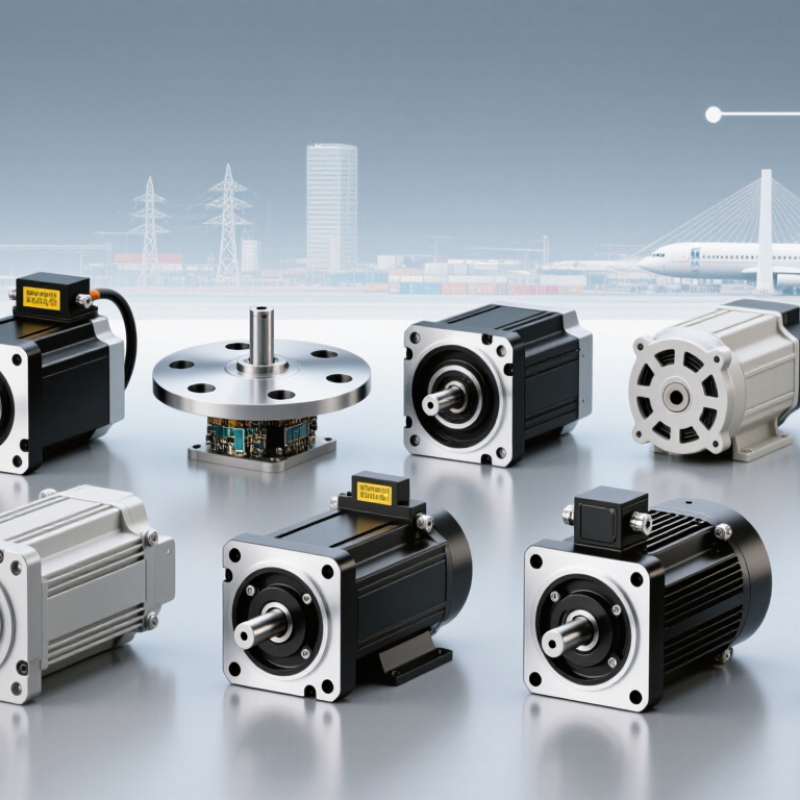
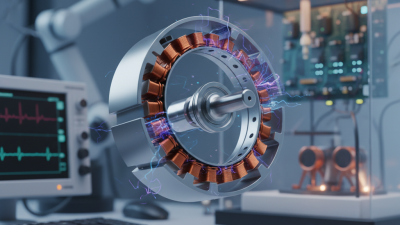
DC brushless motors use electronic commutation instead of mechanical brushes. Their permanent-magnet rotor follows a rotating magnetic field created by the stator. This design reduces brush wear, electrical noise, and routine maintenance. However, the controller, motor, and load must match carefully.
Design classification begins with rotor position. Hall-sensor motors provide reliable starting and steady low-speed control. Sensorless motors reduce wiring, but they may hesitate under heavy startup loads.
Inrunner motors place the rotor inside the stator, supporting higher speed and compact cooling paths. Outrunner motors offer greater torque at lower speed, often through a larger rotating diameter.
Radial-flux and axial-flux structures differ in how magnetic force crosses the air gap. Axial-flux designs can be thin, but thermal management remains challenging.
Buyers should also compare winding layout, pole count, voltage range, continuous torque, and peak torque. A six-step controller is simple and economical. Field-oriented control usually delivers smoother torque and quieter operation.
In a workshop check, measure current at no load, then inspect temperature after a fixed duty cycle. A motor that feels efficient for five minutes may heat quickly after an hour.
This is where catalog figures can mislead. Classification charts look neat, yet real applications overlap. Mounting space, dust, vibration, and start-stop frequency can change the best choice. Even a well-designed selection may need revision after testing.
Top 10 Types of DC Brushless Motors for Global Buyers
The Ten Main Types of DC Brushless Motors Explained
DC brushless motors differ in structure, control, and operating behavior. Inrunner motors keep the rotor inside and suit high-speed applications. Outrunner motors place magnets outside and deliver strong low-speed torque. Radial-flux motors send magnetic force across the air gap. Axial-flux motors use a disc-shaped structure and can reduce installation depth. Slotted motors provide strong torque, although their cogging may affect smooth movement.
Tips: Check voltage, torque, speed, duty cycle, and cooling space before selecting a motor. Ask for test data at your real load, not only no-load speed. Local voltage standards and import requirements also deserve attention.
Slotless motors reduce cogging and often operate quietly. Sensored motors use position feedback for reliable starting and precise control. Sensorless motors simplify wiring but may start poorly under heavy load. Integrated motors combine the motor, driver, and sometimes communication functions. Brushless gearmotors add a gearbox for higher output torque and slower speed. These ten types are practical categories, but their boundaries are not always clean. A motor can be both an outrunner and a sensored model. That detail is easy to miss. In field testing, heat, vibration, and repeated starts often reveal weaknesses that specifications hide.
A practical comparison of common brushless DC motor architectures, operating characteristics, and typical applications
| Type | Defining Construction or Control Feature | Typical Performance Profile | Typical Speed Range | Typical Power Range | Main Advantages | Common Limitations | Typical Applications |
|---|---|---|---|---|---|---|---|
| 1. Inrunner BLDC Motor | The permanent-magnet rotor is located inside the stator. The rotor has a relatively small diameter and low rotational inertia. | High speed, precise dynamic response, and efficient operation when paired with suitable electronic commutation. | 3,000–100,000 rpm | 50 W–100 kW | High maximum speed, quick acceleration, compact rotating assembly, and good thermal access to the stator. | Lower torque density at low speed than many outrunner designs; often requires gearing for high-load applications. | Machine tools, pumps, compressors, electric blowers, drones, and high-speed traction auxiliaries. |
| 2. Outrunner BLDC Motor | The permanent-magnet rotor surrounds the stator and rotates around it. The larger rotor diameter produces a longer torque arm. | High torque at low to medium speed with strong torque density and smooth direct-drive capability. | 200–15,000 rpm | 20 W–30 kW | High torque density, reduced need for gear reduction, and efficient direct-drive operation. | Lower maximum speed than many inrunners; rotating outer housing may require additional mechanical protection. | Electric bicycles, cooling fans, gimbals, robotics, conveyors, and model aircraft. |
| 3. Radial-Flux BLDC Motor | The magnetic flux travels mainly in a radial direction between the rotor and stator air gap. It is the most widely used BLDC geometry. | Balanced efficiency, torque, manufacturability, and control performance across a broad operating range. | 500–30,000 rpm | 10 W–500 kW | Mature design methods, broad component availability, scalable output, and straightforward cooling options. | Longer axial length may be needed for high torque; conventional geometry can have packaging limitations. | Industrial automation, HVAC equipment, appliances, pumps, fans, and light electric vehicles. |
| 4. Axial-Flux BLDC Motor | The magnetic flux travels parallel to the shaft. Disc-shaped rotor and stator arrangements provide a short axial length. | High torque density and a flat form factor, especially useful where axial space is restricted. | 500–20,000 rpm | 100 W–300 kW | Short axial package, potentially high torque-to-weight ratio, and flexible multi-disc configurations. | More demanding air-gap control, thermal management, structural alignment, and manufacturing requirements. | Electric vehicles, robotics, aerospace actuators, compact generators, and low-profile machinery. |
| 5. Slotted BLDC Motor | The stator windings are placed in teeth and slots. The iron teeth guide magnetic flux and support concentrated or distributed windings. | High continuous torque, good overload capability, and strong electromagnetic utilization. | 500–30,000 rpm | 50 W–500 kW | High torque capability, efficient use of copper and iron, and suitability for demanding continuous-duty operation. | Cogging torque, torque ripple, acoustic noise, and additional manufacturing complexity may occur. | Servo systems, industrial drives, pumps, compressors, machine tools, and traction systems. |
| 6. Slotless BLDC Motor | The stator winding is positioned in a smooth ironless or nearly slotless bore, eliminating conventional stator teeth. | Very smooth torque, low cogging torque, low acoustic noise, and fast current response. | 1,000–60,000 rpm | 5 W–10 kW | Excellent motion smoothness, low torque ripple, low rotor inertia, and high positioning quality. | Lower torque density, reduced thermal conduction from the winding, and higher material cost in some designs. | Medical pumps, laboratory equipment, optical systems, robotics, precision stages, and quiet fans. |
| 7. Sensored BLDC Motor | Hall-effect sensors, encoders, resolvers, or other position sensors provide rotor-position feedback to the controller. | Reliable starting, strong low-speed torque, accurate commutation, and improved position control. | 0–30,000 rpm | 10 W–500 kW | Excellent low-speed operation, controlled startup under load, and compatibility with closed-loop speed or position control. | Additional wiring, sensor cost, installation requirements, and possible sensor failure points. | Robotic joints, servo drives, electric vehicles, conveyors, elevators, and precision automation. |
| 8. Sensorless BLDC Motor | Rotor position is estimated from back electromotive force, inductance, or other electrical measurements rather than physical position sensors. | Efficient at medium and high speed, with reduced hardware complexity and lower system cost. | 500–60,000 rpm | 10 W–100 kW | Fewer components, simpler motor cabling, improved resistance to sensor contamination, and lower maintenance requirements. | Starting under heavy load is more challenging; low-speed control and zero-speed position detection may be limited. | Fans, pumps, compressors, appliances, drones, computer cooling systems, and general-purpose drives. |
| 9. High-Speed Spindle BLDC Motor | A high-speed inrunner design uses a mechanically reinforced rotor, optimized bearings, balanced components, and a high-frequency drive. | Very high rotational speed with relatively low torque, requiring careful balancing and thermal management. | 20,000–150,000 rpm | 100 W–100 kW | High material-removal or airflow rates, compact power delivery, and excellent speed response. | Low torque at standstill, demanding bearing and inverter requirements, and strict rotor safety considerations. | CNC spindles, dental tools, turbomachinery, miniature compressors, and high-speed laboratory equipment. |
| 10. BLDC Gearmotor | A brushless motor is integrated with a planetary, spur, helical, or other gearbox to reduce speed and increase output torque. | High output torque at controlled low speed, with efficient electronic speed regulation. | Output: 1–3,000 rpm | 10 W–50 kW | High torque multiplication, compact drive packaging, good controllability, and reduced need for a separate transmission. | Gear wear, backlash, acoustic noise, lubrication requirements, and lower overall efficiency than a motor alone. | Automated doors, material handling, AGVs, medical mechanisms, vending equipment, and industrial actuators. |
Note: Speed and power figures are representative engineering ranges rather than fixed limits. Actual performance depends on motor size, winding design, magnet grade, cooling method, controller settings, duty cycle, and operating environment.
Global buyers often compare brushless motors by rated power, but that number rarely tells the whole story. The ten common types include inner-rotor, outer-rotor, axial-flux, radial-flux, slotless, high-speed spindle, geared BLDC, sensored, sensorless, and dual-rotor motors. Each design changes the balance between torque, speed, noise, and efficiency. Inner-rotor motors usually support higher speeds. Outer-rotor motors often deliver stronger starting torque. Axial-flux models can remain compact, but cooling may become difficult. Slotless motors reduce cogging torque, although their peak torque can be lower. Geared versions trade speed for greater output force.
Torque depends on winding design, magnets, current, and cooling. A 24-volt motor may start a conveyor smoothly but stall under a sudden heavy load. High-speed spindle motors favor low torque and rapid rotation. Robot joints usually need controlled torque at low speed. Sensored motors provide smoother starting and accurate positioning. Sensorless motors can reduce wiring, but they may hesitate at very low speed. This difference matters in pumps, fans, and automated equipment.
Efficiency figures require careful reading. A motor rated at 92% efficiency may reach that value only near one operating point. Controller losses, bearing friction, heat, and gearbox losses reduce real performance. In application reviews, I have seen buyers select a motor from peak speed alone, then face overheating during continuous duty. The safer approach is checking torque curves, duty cycles, ambient temperature, and measured efficiency under the actual load. Laboratory results help, but field conditions are less forgiving.
Inner-rotor motors suit compact fans, pumps, and factory conveyors. They respond quickly and handle moderate heat well.
Outer-rotor motors deliver strong torque at low speed. They fit ceiling fans, ventilation units, and direct-drive rollers.
Slotless motors reduce cogging and acoustic vibration. They work well in medical instruments, camera systems, and precision scanners.
Coreless motors offer very low inertia. Small robots, laboratory devices, and portable tools benefit from their fast acceleration.
High-speed motors support dental equipment, compressors, and compact spindles. They require balanced loads, accurate bearings, and effective cooling.
High-torque motors serve electric actuators, automated doors, and material-handling equipment. They need sturdy mounting and careful overload control.
Sensored motors provide reliable starting under changing loads. They are useful in elevators, robotics, and low-speed positioning systems.
Sensorless motors reduce wiring and maintenance. They perform better in pumps, fans, and applications with predictable rotation.
Integrated motors combine the controller, motor, and protection circuit. They save cabinet space in conveyors and smart appliances.
Waterproof motors suit outdoor pumps, marine equipment, and washdown machinery. Sealing quality matters more than a label.
Dust, salt, and temperature still affect service life. Real sites are less tidy than catalogs. A motor rated for water exposure may still fail after poor cable routing or condensation.
Buyers should check duty cycle, ambient temperature, noise limits, starting load, and maintenance access before selecting a type. Performance claims need testing in the actual operating environment.
Top 10 Types of DC Brushless Motors for Global Buyers
Selecting among inrunner, outrunner, axial-flux, geared, high-speed, low-voltage, water-cooled, sensored, sensorless, and integrated-drive motors requires more than comparing catalog speed. Start with the load profile. Record starting torque, continuous torque, peak torque, speed range, and duty cycle. A compact outrunner may deliver strong torque, while an inrunner often suits high-speed applications. The choice can still fail if thermal limits are ignored.
Efficiency deserves careful attention. The International Energy Agency estimates that electric motor systems consume nearly 50% of global electricity. Small efficiency gains can therefore reduce operating costs across large fleets. Check rated efficiency at the actual working point, not only the maximum published value. IEC 60034-30-1 provides a useful framework for motor efficiency classes. However, controller losses, gearbox friction, and standby consumption also matter. This is often overlooked.
Global buyers should verify voltage tolerance, electromagnetic compatibility, insulation class, ingress protection, and local certification needs. A motor designed for a dry workshop may struggle in coastal humidity or dusty production lines. Feedback selection matters too. Hall sensors can simplify low-speed control, while sensorless designs may reduce wiring and maintenance. Supply continuity needs equal scrutiny: confirm magnet material, bearing availability, repair procedures, and documented test results. Published figures are not always comparable. Ask for thermal curves, acoustic data, and endurance evidence before approval. That extra request may expose an uncomfortable weakness.