Who Are the Top Servo Motor Manufacturers in China?
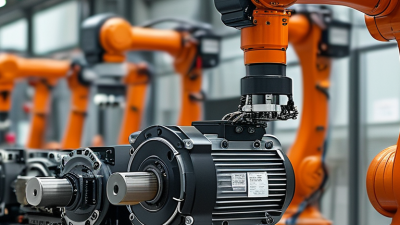
China’s manufacturing sector is a major market for industrial automation, making it an important place to examine Servo Motors and their suppliers. The International Federation of Robotics reported 276,288 industrial robot installations in China in 2023. That represented about 51% of global installations recorded that year, according to its World Robotics 2024 report. Robots depend on precise motion control, and servo systems help drive that movement. The figures show strong automation demand, but they do not measure servo motor sales directly.
That distinction matters. Robot installations are a useful indicator, not a complete market ranking. A company’s scale alone cannot confirm product quality, reliability, or local support. This overview considers Chinese manufacturers through practical factors: product range, motion-control expertise, application experience, technical documentation, and service availability. These details matter on a factory floor, where motor compatibility, feedback accuracy, and repair access can affect production schedules. Small differences can matter.
Readers should also treat comparisons carefully. Publicly available market-share data for individual Chinese servo brands can be limited or inconsistent. A confident ranking may therefore suggest more certainty than the evidence supports. The manufacturers discussed in this guide are assessed as relevant suppliers, not presented as an independently verified sales leaderboard. Buyers should check current specifications, certifications, and support arrangements for their own applications. The best choice depends on the machine, operating conditions, and service needs—not just a name on a list.
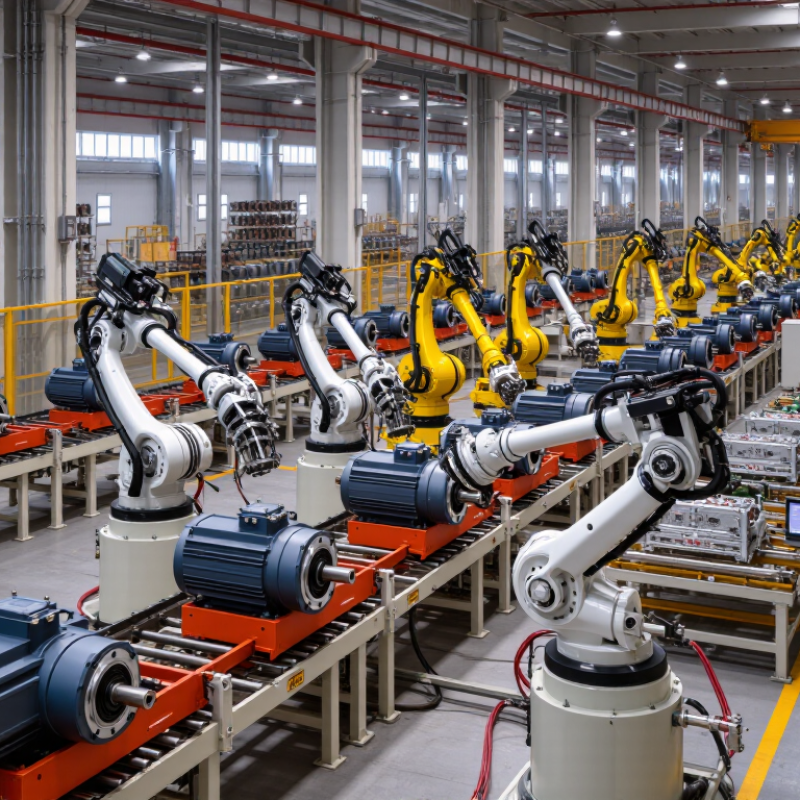
What Servo Motors Are and How They Are Used
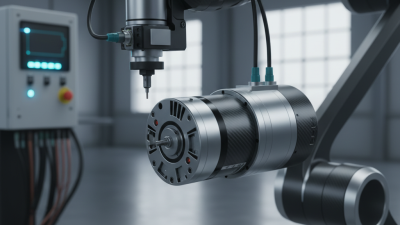
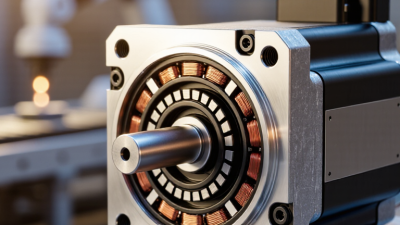
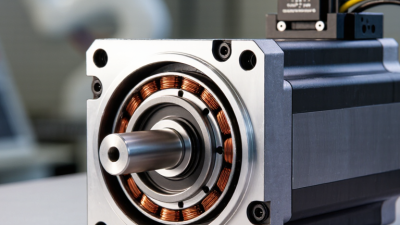
A servo motor converts electrical energy into controlled motion. Unlike a basic motor running at a set speed, a servo system combines a motor, drive, and feedback device, often an encoder. The drive compares commanded motion with measured motion, then corrects the difference. Precision matters. On a packaging line, this can place a label accurately while the conveyor keeps moving. CNC machines, robots, and printing equipment also use servos for quick starts, stops, and repeatable positioning. Not magic. Heat, changing loads, poor tuning, or loose couplings can still cause errors.
The International Energy Agency’s 2011 report, Energy-Efficiency Policy Opportunities for Electric Motor-Driven Systems, estimates that motor-driven systems account for about 46% of global electricity use. This figure includes many motor types, not servos alone, but it highlights the value of efficient drives and correctly sized motors. IEC 61800-9-2 sets efficiency indicators and classes for power drive systems, helping engineers compare equipment. A servo may reduce energy use when it avoids throttling or moves only the load required; actual results depend on the duty cycle and control settings. Specs can mislead. Peak torque alone says little about sustained performance, so assess continuous torque, inertia matching, feedback resolution, and cooling in the real machine. Cable routing and grounding also matter for reliable encoder signals.
What Servo Motors Are and How They Are Used
A servo motor combines a motor with feedback and a controller to regulate position, speed, or torque. It is commonly used in robotics, CNC machines, and automated equipment that require controlled motion.
Example Servo Motion: One Revolution at 60 rpm
This illustrative profile shows a constant 60 rpm rotation: the shaft turns 360 degrees in one second. The values describe a basic motion example, not manufacturer-specific performance data.
How China’s Servo Motor Industry Has Developed
China’s servo motor industry has developed alongside the country’s shift toward automated manufacturing.
Early systems often relied on imported components and technical support. Over time, domestic production expanded, supported by growing demand from machine-tool, packaging, electronics, and robotics factories.
That shift mattered. Local suppliers gained experience producing motors, drives, and encoders as connected systems. Improvements in control software and manufacturing processes helped servo systems respond more accurately to changing loads. In a workshop, this can mean steadier positioning on a moving assembly line and fewer adjustments between production runs. Progress remains uneven. Precision, heat management, and long-term reliability still depend on design quality and operating conditions, not simply production volume.
The industry has also moved toward more integrated solutions, combining motion control with monitoring and data communication. This makes setup easier in some applications, but compatibility can still require careful testing. Buyers should compare torque, speed, feedback resolution, and service support against their actual machine requirements. China’s development is substantial, though it is not a uniform story across every product category or factory.
Leading Servo Motor Manufacturers in China
Leading Servo Motor Manufacturers in China
China’s leading servo motor manufacturers serve packaging, robotics, machine tools, and automated assembly. Their capabilities vary, so a supplier’s scale alone says little about suitability. In practice, buyers should examine motor performance, drive compatibility, engineering support, and production consistency.
“Leading” is best judged against the application, not a generic ranking. An impressive catalog proves little.
Compare rated torque, peak torque, speed range, encoder resolution, and thermal limits. Request torque-speed curves and test reports for the exact motor-and-drive combination. Ask how the manufacturer handles vibration, overheating, and repeated acceleration during validation. Check whether drawings, wiring diagrams, and parameter guides are clear and current. These details matter.
For production lines, confirm sample availability, customization limits, spare-part arrangements, and realistic lead times. A capable engineering team should explain trade-offs, such as greater torque requiring more space or cooling.
Still, factory visits and polished demonstrations cannot replace testing in your own operating conditions. I would be cautious about relying on one sample; longer runs may reveal issues that short trials miss.
How Chinese Manufacturers Compare by Products and Applications
Chinese servo manufacturers vary mainly in motor range, feedback options, drive integration, and application support. Some focus on compact, low-inertia motors for packaging lines and electronic assembly. Others offer higher-torque models for machine tools, injection molding, or heavy conveyor systems. Integrated motor-drive units can simplify wiring, while separate drives may offer more tuning flexibility. The comparison is not neat.
Application demand is substantial. The International Federation of Robotics’ World Robotics 2024 report records 276,288 industrial robots installed in China during 2023, or 51% of global installations. This figure is not a servo-market estimate, but it indicates the scale of automation activity that servo suppliers serve. For a packaging line, buyers may prioritize rapid acceleration and reliable synchronization. A machine-tool builder may care more about torque stability, encoder feedback, and vibration control.
Specifications need context. A high peak-torque rating alone does not prove suitability for continuous operation. Compare rated torque, overload duration, encoder resolution, communication protocols, and protection ratings against the actual duty cycle. Also ask for commissioning support and test data at the intended speed and load. Catalogues can look similar; performance under heat and frequent starts may differ. I would treat broad claims cautiously.