2026 Top High Torque Brushless DC Motor Manufacturers
In 2026, high-torque motion systems demand more than impressive catalog numbers. Engineers need stable torque, efficient cooling, quiet operation, and predictable service life. A High Torque Brushless Dc Motor must perform when loads rise, speeds change, and installation space narrows. This article introduces leading manufacturers shaping that market. It focuses on evidence rather than polished claims. Real applications expose weaknesses quickly. A motor may look powerful on paper. Yet poor heat dissipation can reduce output within minutes.
The comparison considers manufacturers through practical engineering criteria. These include continuous and peak torque, torque-speed curves, winding quality, rotor balance, bearing selection, and controller compatibility. We also examine customization capacity, production testing, supply consistency, and technical support. Hall sensors and encoders matter in robotics, automated guided vehicles, medical equipment, and precision automation. Sealed housings help in dusty factories. Thermal sensors protect windings during repeated acceleration. Reliable suppliers should provide test methods, tolerances, and clear operating limits. Certifications support confidence, but they do not replace independent verification.
This overview does not treat “top” as a permanent label. Factory capability, delivery performance, and after-sales responsiveness can change. Some manufacturers excel at compact motors. Others handle large industrial drives better. That difference matters. Readers should match each supplier to the load profile, duty cycle, environment, and budget. We also acknowledge an unavoidable limitation: public data rarely reveals every failure rate or long-term field result. Therefore, this shortlist should guide deeper checks, sample testing, and direct technical discussions. Good selection begins with measured performance, not marketing language.
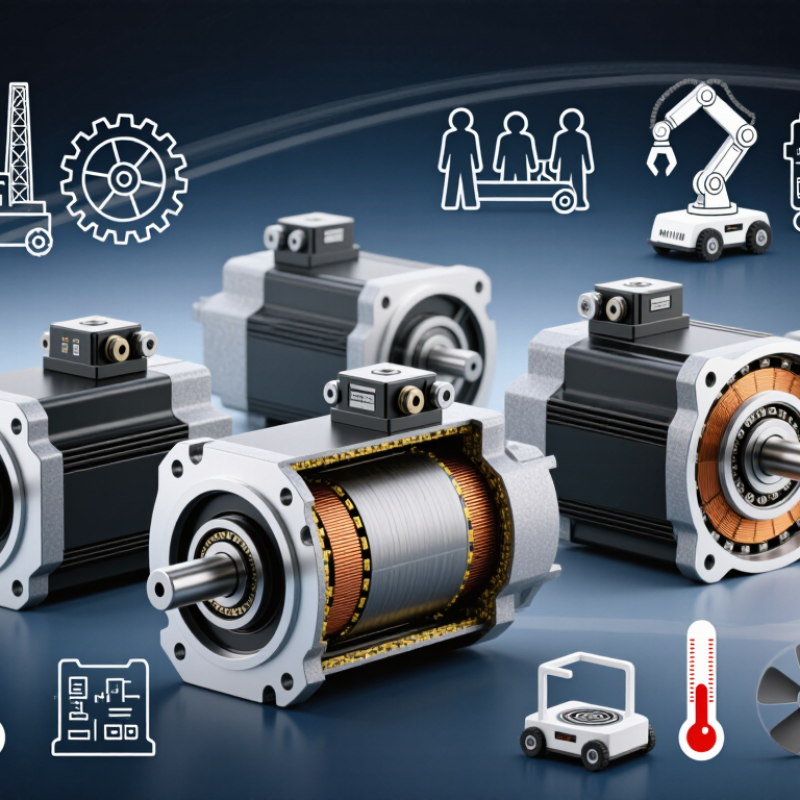
Defining High-Torque BLDC Motors: ≥1 N·m Output and ≥85% Efficiency
2026 Top High Torque Brushless DC Motor Manufacturers
A high-torque BLDC motor should mean more than a large catalogue number. For this article, the practical threshold is at least 1 N·m continuous output torque and 85% efficiency under defined operating conditions. Torque must be measured at the rated speed, not only during a short peak. Otherwise, comparisons become misleading.
The International Energy Agency reports that electric motor systems consume roughly half of global electricity. The U.S. Department of Energy also identifies motor-driven equipment as a major share of industrial electricity use. These figures make efficiency more than a marketing detail.
An 85% efficient motor converts 850 watts from every 1,000 watts supplied. Heat still matters. In a compact actuator, poor cooling can quickly reduce torque and service life.
Professional evaluation should include winding temperature, controller losses, duty cycle, and gearbox effects. IEC 60034-2-1 provides recognized methods for measuring motor losses and efficiency. Yet one weakness remains: some specifications mix motor-only efficiency with complete drive-system efficiency. That can confuse buyers. Engineers should request test curves, continuous torque data, thermal limits, and test temperature. A motor delivering 1 N·m for ten seconds is not equal to one sustaining it for eight hours. This distinction is easy to miss, even in technical purchasing.
2026 Manufacturer Ranking Criteria: Torque Density, Duty Cycle, and IP Ratings
2026 Top High Torque Brushless DC Motor Manufacturers should be ranked by usable torque, not peak claims. Torque density, measured in Nm/kg, shows how much mechanical output fits inside a limited space. Yet continuous torque matters more in conveyors, robotics, and pumps. A motor producing 8 Nm for ten seconds may fail where 3 Nm is required continuously.
The U.S. Department of Energy reports that motor-driven equipment consumes about 68% of industrial electricity. The IEA also estimates that electric motor systems use roughly half of global electricity. These figures make efficiency and thermal control important ranking factors. IEC 60034-1 duty classifications help separate S1 continuous operation from short intermittent cycles. IP ratings, defined by IEC 60529, add another practical test. IP65 protects against dust and water jets, while IP67 supports temporary immersion. Still, an IP rating does not guarantee chemical resistance or long-term sealing performance.
Tips: Check the full load curve, not only the headline torque. Ask for temperature-rise data at the stated duty cycle. Test the motor with its actual gearbox, controller, and mounting position. A ranking can look precise while missing vibration, bearing life, or cable sealing. That weakness deserves attention. Manufacturers with verified thermal data, repeatable testing, and clear tolerances should rank higher than suppliers offering impressive but incomplete specifications.
2026 Top High Torque Brushless DC Motor Manufacturers
Manufacturer-neutral ranking benchmark based on torque density, duty-cycle capability, and ingress protection.
The benchmark uses a transparent 100-point model: torque density contributes 40 points, duty-cycle capability contributes 35 points, and IP protection contributes 25 points. Reference values reflect common engineering targets for high-torque BLDC motor applications and do not represent any specific company or brand.
| Reference profile |
Torque density |
Duty cycle |
Ingress protection |
| Robotic joint actuator |
15 Nm/kg |
S3, 60% intermittent duty |
IP67 |
| High-performance servo |
12 Nm/kg |
S1 continuous duty |
IP65 |
| Traction drive |
8 Nm/kg |
S2, 30-minute duty |
IP67 |
| Industrial fan motor |
2.5 Nm/kg |
S1 continuous duty |
IP55 |
Leading 2026 BLDC Motor Manufacturers for 24–72 V Industrial Drives
In 2026, leading BLDC motor manufacturers are judged by more than peak torque. For 24–72 V industrial drives, engineers need stable output, predictable heating, and clean control across long duty cycles. A serious manufacturer should publish torque-speed curves, winding data, thermal limits, and test conditions. Those details make comparisons less speculative.
High-torque designs usually combine strong magnets, low-resistance windings, and carefully sized bearings. The best suppliers also support Hall sensors, encoders, and configurable feedback options. This matters in conveyors, pumps, robotics, and compact automation cabinets. During evaluation, request samples at the intended voltage, load, and ambient temperature. Bench results can disappoint. A motor that performs well for five minutes may overheat after two hours. Manufacturers with documented endurance testing offer stronger engineering confidence.
Look for production traceability, repeatable balancing, insulation testing, and responsive technical support. Clear drawings and connector definitions prevent costly integration mistakes. Independent verification helps when claimed efficiency or torque seems unusually high. Still, no supplier fits every machine. Some manufacturers excel at customization but lack short lead times. Others deliver quickly, yet provide limited thermal data. That tradeoff deserves honest review before selecting a 24–72 V motor platform.
2026 Top High Torque Brushless DC Motor Manufacturers - Leading 2026 BLDC Motor Manufacturers for 24–72 V Industrial Drives
| Motor Segment |
Nominal Voltage |
Typical Continuous Power |
Typical Peak Torque |
Typical Speed Range |
Peak Efficiency |
Feedback Options |
Cooling Method |
Ingress Protection |
Typical Industrial Use |
| Compact High-Torque BLDC |
24 VDC |
0.3–2.0 kW |
2–12 N·m |
500–6,000 rpm |
82–90% |
Hall sensors; incremental encoder |
Natural or forced air |
IP54–IP65 |
AGVs, conveyors, compact automation |
| General Industrial BLDC |
48 VDC |
1–10 kW |
8–45 N·m |
300–5,000 rpm |
86–93% |
Hall sensors; encoder; resolver |
Forced air or liquid jacket |
IP54–IP67 |
Material handling, pumps, robotics |
| High-Torque Industrial BLDC |
72 VDC |
2–20 kW |
15–90 N·m |
250–4,000 rpm |
88–95% |
Encoder; resolver; Hall sensors |
Liquid cooling or forced air |
IP65–IP69K |
Electric utility vehicles, hoists, winches |
| Low-Speed Direct-Drive BLDC |
24–72 VDC |
0.5–8 kW |
20–160 N·m |
50–1,500 rpm |
80–92% |
Hall sensors; absolute encoder |
Natural, forced air, or liquid |
IP55–IP67 |
Rotary tables, indexing systems, actuators |
| Servo-Grade BLDC |
48–72 VDC |
0.75–12 kW |
5–70 N·m |
100–6,000 rpm |
88–95% |
17-bit or higher encoder; resolver |
Forced air or liquid jacket |
IP54–IP67 |
CNC equipment, robotics, precision motion |
| Heavy-Duty Traction BLDC |
48–72 VDC |
3–30 kW |
30–180 N·m |
200–4,500 rpm |
89–96% |
Hall sensors; encoder; resolver |
Liquid cooling or high-flow air |
IP65–IP67 |
Forklifts, mobile machinery, electric drives |
Technical note: Values are representative engineering ranges for 24–72 V industrial BLDC motor classes. Actual ratings depend on frame size, duty cycle, ambient temperature, controller limits, cooling conditions, and test method.
Selecting Manufacturers by IEC 60034 Compliance, Testing, and Global Support
2026 Top High Torque Brushless DC Motor Manufacturers
High-torque BLDC motor selection should begin with IEC 60034 evidence, not brochure torque figures. The IEA estimated that electric motor systems consume about 53% of global electricity. Efficiency claims deserve careful verification.
Ask manufacturers which IEC 60034 parts apply to the motor and drive package. Relevant checks may include temperature rise, insulation, vibration, efficiency, and mechanical protection. Request signed test reports, calibrated equipment records, and serial-number traceability.
A credible test should show torque-speed curves, thermal limits, duty cycles, and overload behavior. Watch the details. A certificate alone is not enough.
Independent laboratories operating under ISO/IEC 17025 can strengthen confidence, especially for efficiency and endurance testing. During supplier audits, inspect a loaded dynamometer, winding-temperature sensors, and vibration measurements at rated speed. The 2023 U.S. Department of Energy Motor Systems Market Assessment also emphasized the large energy impact of industrial motor systems, making verified efficiency commercially important.
Global support must be measurable. Look for regional service engineers, multilingual manuals, spare rotor and encoder availability, and documented response times. Ask how faults are diagnosed when a motor operates thousands of kilometers away.
Some manufacturers provide excellent prototypes but weaker field support. That gap is easy to miss. No supplier gets every detail right; incomplete test records or unclear warranty limits should trigger further questions.