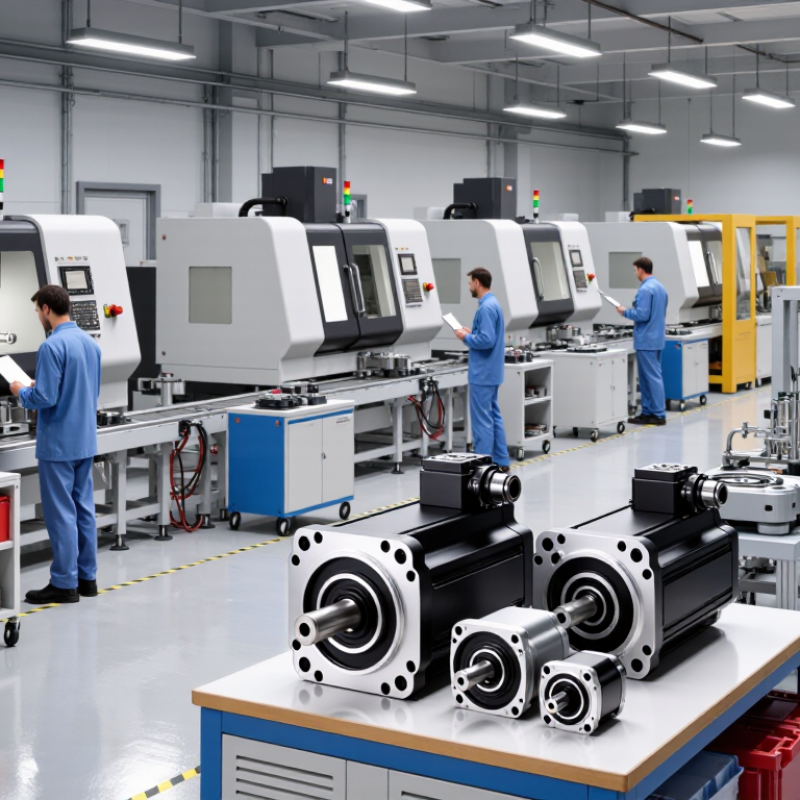
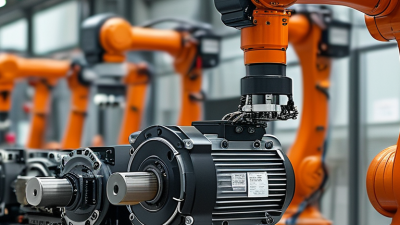
China has become a major sourcing base for Dc Servo Motor technology. Its manufacturers serve robotics, packaging, CNC equipment, medical devices, and automated assembly lines. However, factory volume does not automatically indicate dependable engineering.
George Ellis, a respected motion-control engineer and author, states, “Feedback is the heart of servo control.” This principle remains practical. A motor may look powerful on a specification sheet, yet poor feedback tuning can create vibration, overshoot, or positioning errors. In a real production line, a loose encoder cable can stop an entire shift. Small details matter.
This guide examines China’s leading Dc Servo Motor manufacturers and suppliers through an engineering-focused lens. It considers rated torque, speed range, encoder resolution, thermal performance, protection ratings, and controller compatibility. It also reviews customization ability, testing procedures, export experience, and after-sales support. These factors reveal more than a polished catalog.
Some supplier rankings remain subjective. That deserves attention. Pricing can also change with copper costs, exchange rates, freight charges, and order volume. A factory offering the lowest quotation may not provide the lowest operating cost. Buyers should request sample reports, load-test records, wiring diagrams, and clear warranty terms before placing orders.
The strongest suppliers usually combine stable production with responsive technical communication. They explain limitations instead of promising everything. That is important. A reliable sourcing decision depends on evidence, not advertising language. This overview helps engineers, distributors, and purchasing teams compare Chinese suppliers more carefully and select a Dc Servo Motor partner suited to their actual application.
A DC servo motor is a motor built for controlled movement, not simple rotation. It combines a DC motor, feedback sensor, and drive system. The sensor reports position or speed, while the controller corrects errors in real time. This allows accurate motion in packaging machines, robotic joints, medical equipment, and automated production lines. Small errors matter here. Even a slight positioning delay can damage a workpiece or reduce cycle consistency.
China matters because its industrial supply chain covers magnets, copper windings, sensors, drives, machining, and final assembly. This concentration can shorten development cycles and support flexible production volumes. Many Chinese manufacturers and suppliers also provide customized shafts, connectors, voltage ratings, and mounting dimensions. Engineers should still examine feedback resolution, torque curves, thermal limits, insulation quality, and test records. A low purchase price can hide weak bearings or unstable control performance. That lesson is easy to overlook.
Reliable sourcing requires more than reading a catalog. Request load-test data, sample units, wiring diagrams, and traceable inspection reports. Check whether the supplier can maintain consistent batches, not just produce one successful sample. Communication quality matters during commissioning. Technical terms can be translated correctly but interpreted differently. A careful factory audit may reveal practical details, such as loose cable glands or insufficient cooling space. China offers strong manufacturing depth, but supplier evaluation remains the buyer’s responsibility. Mistakes happen. Good engineers leave room to question their first decision.
Evaluating China’s top DC servo motor manufacturers requires more than comparing prices or browsing polished websites. Start with engineering evidence: rated torque, peak torque, speed range, encoder resolution, voltage options, and thermal limits. Ask for test curves at your intended load, not only ideal laboratory figures. A reliable supplier should explain how its motor performs during repeated acceleration, sudden stops, and long operating cycles.
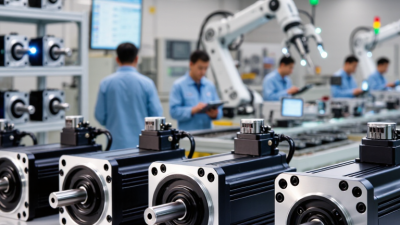
Factory capability matters as much as the specification sheet. Request a virtual or in-person production review, if practical. Look for winding equipment, rotor balancing, automated inspection, and traceable serial-number records. Ask how the manufacturer controls shaft runout, bearing noise, insulation strength, and assembly consistency. A sample should match the production version. It should also arrive with inspection data.
No evaluation is perfect. Supplier claims still need checking. Compare sample results with your controller, gearbox, and actual duty cycle. Some manufacturers answer technical questions clearly but provide weak after-sales support. Others offer fast customization yet lack stable component sourcing. Clarify lead times, minimum order quantities, replacement procedures, firmware or driver compatibility, and documentation ownership before signing an agreement. Independent certifications can support credibility, but they do not replace application testing. Keep written records of every agreed tolerance, test condition, and delivery requirement; small omissions can become expensive problems later.
This procurement framework prioritizes the factors that most directly affect DC servo motor reliability, motion accuracy, integration, and total cost of ownership. Buyers should validate each factor using datasheets, test reports, samples, and production references.
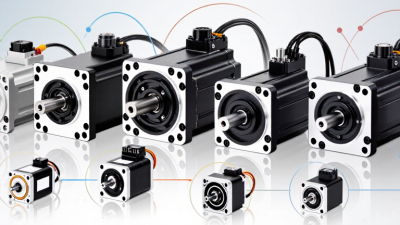
Chinese DC servo motor manufacturers and suppliers offer a broad product range for robotics, packaging equipment, medical devices, and factory automation. Their portfolios commonly include brushed and brushless DC servo motors, integrated servo drives, planetary gearboxes, encoders, and motion controllers. Compact motors may deliver precise positioning in a small frame, while higher-torque models support conveyors and articulated machinery.
The key technology is feedback control. Suppliers often provide incremental or absolute encoders, with resolutions selected for speed, accuracy, and budget. Some systems support EtherCAT, CANopen, Modbus RTU, or pulse-train control.
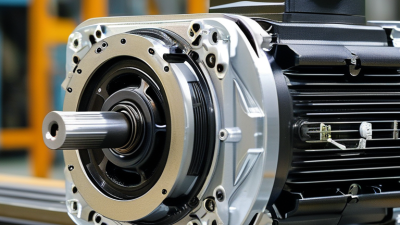
Permanent-magnet rotors improve torque density, while optimized windings reduce heat during repeated acceleration. Protection ratings, thermal sensors, brake options, and customized shafts are also available. Ask for measured data, not only catalog values.
In practical sourcing, I check torque curves, backlash, encoder compatibility, and continuous-load performance. A motor that looks powerful may overheat in a confined cabinet. Small details matter. Chinese factories increasingly use automated winding, rotor balancing, aging tests, and serial-number traceability. However, quality can vary between suppliers and production batches. Request sample testing, inspection records, and communication protocols before approving volume orders. I would also verify noise levels under real operating conditions, because laboratory figures may not reflect a dusty workshop or frequent stop-start cycles.
China’s DC servo motor manufacturers compete through quality control, customization, and scalable production. Fortune Business Insights estimated the global servo motor market at approximately USD 10.97 billion in 2023, with continued industrial automation growth. This demand raises buyer expectations for repeatable torque, low backlash, and stable thermal performance.
Reliable suppliers should align motor testing with IEC 60034-1 requirements and maintain ISO 9001-based process controls. Practical checks include winding resistance, insulation strength, no-load current, vibration, and encoder accuracy. Production lines should also use rotor balancing equipment and traceable test records. Small details matter. A loose connector can defeat an otherwise excellent motor.
Customization often includes voltage, rated speed, shaft geometry, mounting holes, brake options, and feedback devices. Experienced manufacturers verify these changes through sample builds, endurance tests, and temperature-rise measurements. The International Federation of Robotics reported more than 541,000 industrial robots installed worldwide in 2023, showing why responsive motor integration matters. Capacity should include prototype support, automated winding, machining, final assembly, and shipment inspection. Yet, no factory is flawless. Buyers should question unclear tolerance data, limited test evidence, and impressive capacity claims without production records. A lower price may hide rework, inconsistent materials, or weak after-sales engineering.
| Evaluation Dimension | Typical Industry Data | Quality Benchmark | Customization Options | Evidence to Request |
|---|---|---|---|---|
| Motor Technology | Permanent-magnet brushed DC servo motors and brushless DC servo motors are both used in closed-loop motion systems. | The motor type should match the required duty cycle, maintenance interval, noise level, speed range, and control architecture. | Brushed or brushless design; slotted or slotless construction; integrated or separate drive electronics. | Motor construction drawings, electrical schematics, thermal data, and application reference parameters. |
| Rated Voltage | Common DC bus or winding voltage classes include 12 V, 24 V, 48 V, 72 V, and 96 V; higher-voltage systems may use a servo drive with a rectified AC bus. | Rated voltage, allowable tolerance, insulation system, and dielectric withstand should be clearly specified. | Custom winding, connector, cable length, voltage class, and braking or regenerative arrangement. | Nameplate data, winding resistance, insulation-class information, and dielectric-strength test results. |
| Power and Torque | Small DC servo motors commonly cover approximately 20 W to 1 kW; larger industrial configurations can extend beyond this range. Continuous torque is application-dependent. | Continuous torque, peak torque, overload duration, and thermal limits must be stated separately. | Winding design, rotor inertia, shaft diameter, keyway, flange, and torque-speed profile. | Verified torque-speed curves at defined voltage, temperature, duty cycle, and cooling conditions. |
| Speed Range | Typical operating speeds range from several hundred revolutions per minute to approximately 3,000–6,000 rpm, depending on motor design and drive settings. | Maximum speed must be supported by rotor-balance, bearing, commutation, and thermal test data. | Low-speed winding, high-speed rotor design, gearhead integration, and application-specific acceleration profiles. | No-load speed, rated speed, overspeed test results, vibration data, and speed-torque curves. |
| Feedback Device | Incremental encoders, Hall sensors, magnetic encoders, and optical encoders are common feedback choices. | Resolution, signal quality, alignment accuracy, operating temperature, and mechanical mounting tolerance should be documented. | Encoder resolution, line count, output format, connector, commutation sensor, and cable routing. | Encoder datasheet, calibration procedure, index-position tolerance, and end-of-line feedback test records. |
| Positioning Accuracy | System accuracy depends on encoder resolution, drive tuning, mechanical backlash, compliance, load inertia, and transmission design. | Motor accuracy should not be presented as complete machine accuracy; repeatability and settling time should be reported separately. | Feedback resolution, servo-tuning profile, gear reduction, brake, and low-backlash transmission options. | Repeatability test method, settling-time data, backlash measurement, and defined load conditions. |
| Thermal Performance | Thermal performance is influenced by copper loss, iron loss, ambient temperature, mounting orientation, duty cycle, and natural or forced cooling. | Continuous rating should be linked to a stated ambient temperature, insulation system, temperature-rise limit, and duty cycle. | Higher-temperature winding insulation, fan cooling, thermal sensors, larger housing, and customized duty-cycle rating. | Temperature-rise test, thermal resistance, sensor type, insulation class, and continuous-duty test report. |
| Environmental Protection | Industrial motor protection levels commonly range from open-frame designs to sealed enclosures such as IP54, IP55, or higher when properly engineered. | Ingress protection should be tested and designated according to IEC 60529; the rating applies only to the tested configuration. | Seal arrangement, connector protection, corrosion-resistant coating, shaft seal, and application-specific enclosure. | IP test report, ambient-temperature range, humidity limits, vibration test, and corrosion or salt-spray data where relevant. |
| Mechanical Interface | Common interfaces include round flanges, square flanges, keyed shafts, plain shafts, threaded shafts, and gearhead mounting patterns. | Critical dimensions should follow controlled drawings with defined tolerances and inspection points. | Flange size, shaft length, shaft diameter, keyway, mounting holes, brake, gearhead, and cable exit direction. | Released 2D drawings, 3D CAD files, dimensional inspection reports, and fit-check samples. |
| Quality Management | A documented quality-management system based on ISO 9001 is widely used for controlled production and traceability. | Certification should be current, issued by an accredited body, and applicable to the relevant manufacturing scope. | Inspection plans, supplier controls, process capability studies, and customer-specific quality agreements. | Valid certificate, process flow chart, control plan, corrective-action records, and batch traceability procedure. |
| Product and Electrical Standards | Rotating-machine requirements are commonly evaluated against IEC 60034-1 or corresponding national standards; enclosure protection is addressed by IEC 60529. | Applicable standards depend on voltage, market, motor construction, drive system, and final equipment classification. | Market-specific labeling, documentation, insulation system, connector configuration, and compliance testing. | Declaration of conformity where applicable, test reports, marking files, and a standards compliance matrix. |
| Production Capability | Relevant capabilities include winding, balancing, magnet assembly, commutation or sensor installation, machining, assembly, calibration, and automated end-of-line testing. | Repeatable process controls are more important than stated annual capacity alone. | Prototype builds, pilot production, low-volume engineering orders, and high-volume standardized production. | Factory process audit, equipment list, production-flow description, monthly capacity by model family, and quality yield data. |
| Testing and Reliability | Typical tests include winding resistance, insulation resistance, dielectric withstand, no-load current, vibration, noise, speed, torque, and feedback verification. | Acceptance limits, calibrated instruments, sampling plans, and full traceability should be defined before mass production. | Custom end-of-line test programs, burn-in, life testing, environmental testing, and application-specific load testing. | Calibration certificates, factory acceptance test format, reliability plan, failure-analysis process, and sample reports. |
| Customization and Development | Customization may involve electromagnetic design, mechanical dimensions, feedback, connectors, firmware settings, brake, gearhead, and cable assembly. | A controlled design-change process should protect performance, interchangeability, and compliance after customization. | Sample validation, design-for-manufacture review, prototype iteration, tooling development, and production transfer. | Engineering change procedure, validation plan, prototype test report, design ownership terms, and approved sample record. |
| Supply and After-Sales Support | Delivery performance depends on material availability, tooling status, production scheduling, inspection workload, and order quantity. | A reliable supplier should provide controlled revision management, spare-part support, warranty terms, and documented failure response. | Forecast-based production, safety stock, regional service arrangements, replacement units, and repair or analysis support. | Lead-time commitment, on-time-delivery history, warranty policy, response-time target, and corrective-action workflow. |

Choosing the right Chinese DC servo motor supplier requires more than comparing unit prices. MarketsandMarkets reported that the global servo motors and drives market could grow from about USD 15.3 billion in 2023 to USD 20.9 billion by 2028. This growth increases supplier choices, but also makes technical screening more important.
Ask for measured torque-speed curves, encoder resolution, winding temperature data, and overload capacity. Request samples from the same production line used for volume orders. Test them under your actual load, duty cycle, ambient temperature, and braking conditions. A motor that performs well on a clean laboratory bench may struggle inside a dusty machine cabinet. Check whether the supplier follows ISO 9001 procedures and can provide documented inspection records. IEC 61800-5-2 is also relevant when functional safety affects the drive system.
Review more than the factory visit. Verify component traceability, calibration records, firmware control, spare-part availability, and response times for technical support. I would also inspect rejected-unit handling, because quality often appears there. No supplier is perfect. A polished brochure can still hide weak thermal margins or inconsistent encoder alignment. Ask for three recent batch reports, not one carefully selected sample. The International Energy Agency continues to emphasize industrial efficiency, so lifetime losses and cooling requirements deserve a place in the quotation. Price matters, but predictable performance matters longer.