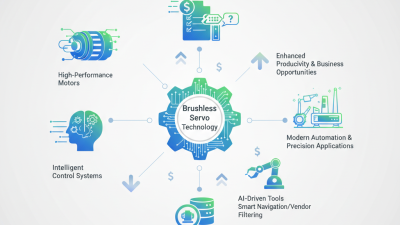
Top 10 Brushless Servo Motor Manufacturers in China
Choosing a Brushless Servo manufacturer is not just a matter of comparing prices or scanning a product catalog. In real equipment, motor performance depends on the application, drive, feedback system, and working conditions. A motor that runs smoothly on a test bench may behave differently beside a hot machine or under frequent starts and stops. Small details matter.
This guide introduces ten Brushless Servo manufacturers in China and offers practical points for comparing them. It considers product range, torque and speed options, encoder feedback, drive compatibility, customization, and technical support. Factory experience and documented quality processes can also help buyers assess a supplier, but claims should be checked against current specifications and, where possible, sample testing. That matters. A polished website alone cannot confirm reliability.
The right choice depends on what the motor must do. A compact unit for packaging equipment may need different features from a high-torque model used in machine tools. Buyers should share load profiles, operating cycles, installation limits, and environmental conditions before requesting a quotation. Then compare the responses carefully. Not always easy. Some specifications look similar on paper, while service quality and integration support become clear only later. This overview aims to make those differences easier to investigate, not to suggest that one manufacturer fits every project.
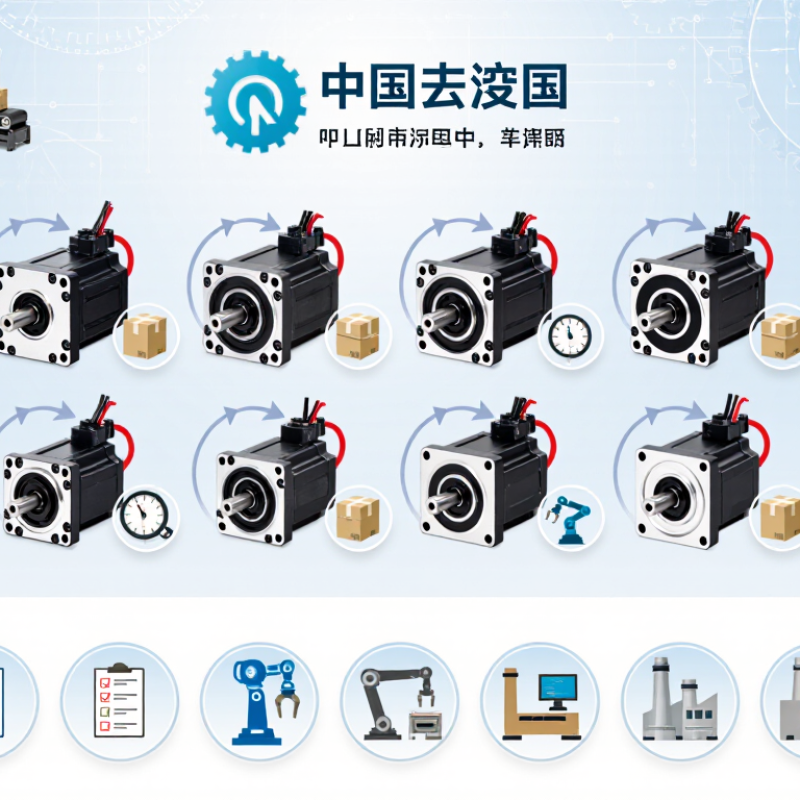
Brushless Servo Motors: Core Technology and Industrial Applications
Brushless servo motors turn electrical commands into controlled motion through a permanent-magnet rotor and electronically switched stator windings. A drive reads encoder feedback and adjusts phase current repeatedly, correcting position and speed errors before they grow. This closed-loop action supports smooth starts, repeatable stops, and accurate torque at low speeds.
Small errors matter.
On packaging lines, a servo can index a film roller by a few millimeters, then pause without hunting. Robots use coordinated axes to place parts, while CNC equipment relies on stable speed during fine cuts. Manufacturers in China produce systems with varied frame sizes, feedback options, and drive interfaces. Selection should match load inertia, peak torque, duty cycle, and ambient temperature—not just rated power.
Heat still wins.
A practical evaluation includes encoder resolution, tuning behavior, overload duration, and temperature rise during a real production cycle. Request test data under comparable loads, and verify cable, connector, and controller compatibility before installation. Specifications can look clean on paper, while vibration or poor grounding complicates commissioning. That gap deserves honest attention. Performance also depends on mechanical stiffness, alignment, and maintenance; the motor alone cannot correct a flexible coupling.
China’s Brushless Servo Motor Industry and Market Landscape
China’s brushless servo motor industry serves factory automation, packaging, machine tools, and electronics production. Demand is shaped by tighter positioning requirements and the need for reliable, energy-conscious motion control. Manufacturers compete through motor design, encoder compatibility, drive tuning, customization, and technical support. Capability varies, though. A polished catalogue does not prove stable performance on a production line.
The market includes large-scale producers and more specialized suppliers. Buyers comparing a top 10 list should look beyond headline torque or rated speed. Check operating curves, thermal limits, encoder resolution, and performance at low speeds. Ask how the supplier tests vibration and continuous-duty operation. Request sample data and confirm which commissioning support is available. These checks help distinguish documented engineering from broad sales claims, but actual results still depend on the machine and installation.
Tips: Match the motor to the load, not just the machine’s peak rating. Review cables, connectors, and drive settings together. Ask for test conditions in writing. A small detail matters. Supplier data can be incomplete, so validate critical specifications with a sample run before scaling up.
Criteria for Evaluating Brushless Servo Motor Manufacturers
When comparing brushless servo motor manufacturers in China, start with testable performance, not catalogue claims. Request torque-speed curves at stated voltage, current, and temperature. Check encoder resolution, speed ripple, overload duration, and braking options against your machine’s duty cycle. Ask for thermal-rise and endurance test records. A motor that fits a drawing may still overheat inside a crowded cabinet. Details matter.
The International Federation of Robotics reported 541,302 industrial robot installations worldwide in 2023, with 70% installed in Asia (World Robotics 2024).
This scale makes supplier capacity worth checking, but it does not prove product quality. Review sample inspection records, component traceability, and how failures are analyzed. Confirm that the manufacturer can provide matched drives, tuning support, and spare parts for the intended service life. For high-acceleration axes, compare rotor inertia and settling behavior under a real load, not only at no-load speed. No datasheet tells the whole story. Factory audits help, though a short visit may miss inconsistent production. Ask for repeatable test results from multiple production batches.
Profiles of Ten Leading Brushless Servo Motor Manufacturers in China
China’s brushless servo motor sector includes manufacturers with different engineering strengths. One focuses on compact motors for packaging equipment, where quick acceleration and tight cabinet space matter. Another develops higher-torque units for machine tools, pairing robust housings with careful thermal design. A third supplies servo systems for textile machinery, emphasizing smooth low-speed operation. The details matter. A fourth serves automated assembly lines, offering matched motors, drives, and encoder options.
A fifth manufacturer concentrates on small motors for laboratory and inspection equipment, where low vibration can be critical. A sixth builds custom units for material-handling systems, adapting shafts and connectors to project requirements. A seventh targets general industrial automation, with broad power ranges and familiar control interfaces. Their catalogs can look similar. Their tuning support may not be.
An eighth maker specializes in motors designed for dusty production settings, though buyers should verify protection ratings for each model. A ninth supplies solutions for electronics manufacturing, prioritizing repeatable positioning and compact installation. A tenth offers configurable servo packages for machinery builders, including technical documentation and commissioning guidance. These profiles are starting points, not proof of performance. Request test data, inspect continuous-torque curves, and confirm encoder compatibility before selecting a supplier. Even published specifications deserve a close look.
Comparing Manufacturers by Products, Capabilities, and Applications
A useful Top 10 comparison should look beyond peak torque and catalog size. Chinese brushless servo manufacturers differ in motor formats, drive integration, customization, and support for specific machines. Some focus on compact motors for packaging equipment; others build higher-power systems for machine tools, robotics, or automated production lines. Check rated torque, speed range, encoder resolution, and overload capacity against the actual motion profile. Small details matter. A motor that fits the mounting plate may still need a different shaft, brake, or cable connector.
Manufacturing capability also changes the comparison. Ask whether the supplier can provide matched motor-and-drive sets, test reports, and clear tuning guidance. For repeated starts, inspect thermal data and duty-cycle limits, not just peak ratings. For precise positioning, check encoder specifications and low-speed stability. Samples can reveal vibration or wiring issues that a product sheet misses. One caveat: advertised accuracy may depend on the drive, load, and installation. It is easy to compare headline numbers; comparing test conditions is less tidy. Request application references and confirm spare-part availability before ordering.
Top 10 Brushless Servo Motor Manufacturers in China — Comparing Products, Capabilities, and Applications
Reference chart: theoretical torque at different speeds for three example power levels. Values are calculated using torque = power ÷ angular velocity; they are not specifications or performance claims for any manufacturer.
Use product catalogs to compare actual rated torque, speed, feedback options, drive compatibility, and application fit. Real motor performance depends on the specific model and operating conditions.