Why Choose a Brushless DC Servo Motor?
A Brushless Dc Servo Motor is built for applications where motion must be controlled, not merely produced. It combines electronic commutation with feedback, allowing a drive to adjust torque and speed as operating conditions change. On a packaging line, that can mean a conveyor indexing cleanly beside a sensor, rather than overshooting its mark. In a robotic joint, it can mean repeatable movement through a defined path. Small details matter.
The appeal is practical. Brushless designs avoid mechanical brushes, reducing one source of wear and routine maintenance. They can also deliver responsive control and strong performance in a compact package. Yet the motor alone does not guarantee accuracy. Encoder quality, drive tuning, load inertia, cooling, and installation all shape the result. A poorly matched system can still vibrate, overheat, or miss its target. That deserves honest attention.
Dr. R. Krishnan is widely recognized for his work on electric drives and brushless motor technology. A concise paraphrase of a principle reflected in his work is: “Precise motion depends on the motor and its control system working together.” It is a useful reminder, not a substitute for application testing. Engineers should compare required speed, peak torque, duty cycle, feedback resolution, and environmental conditions before selecting a motor. A datasheet is a starting point. Real loads can surprise you.
This guide examines why designers choose a Brushless Dc Servo Motor, where it performs well, and what trade-offs deserve a closer look. The right choice is rarely the most powerful model. It is the one that meets the motion requirement reliably, within the machine’s actual limits.
What Is a Brushless DC Servo Motor?
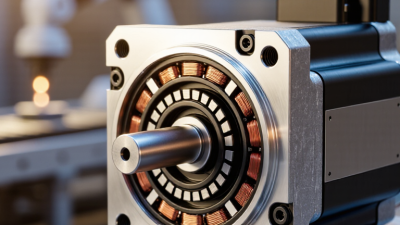
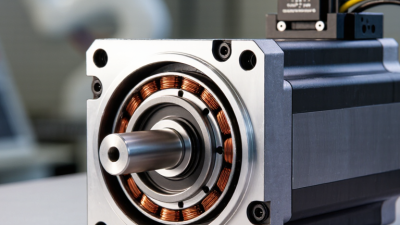
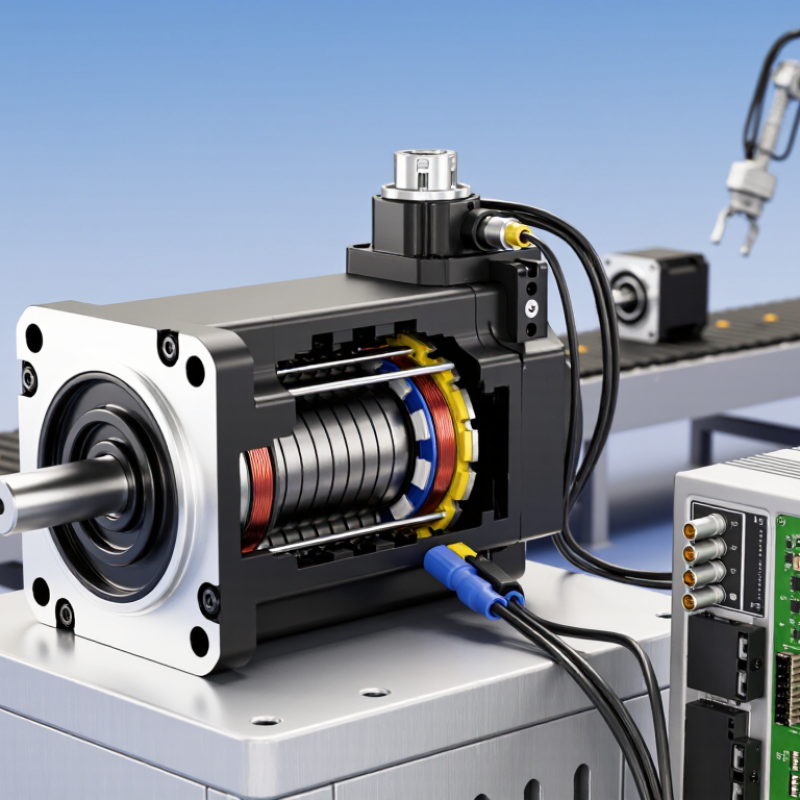
A brushless DC servo motor is an electric motor designed to control motion accurately. Its rotor usually contains permanent magnets, while coils sit in the stationary outer section. An electronic drive switches current through those coils, creating a rotating magnetic field that turns the rotor. There are no brushes rubbing against a commutator. That reduces one source of wear, but it does not make the motor maintenance-free.
A servo motor works as part of a feedback system. An encoder or resolver reports the shaft’s position or speed to a controller. The controller compares that reading with the requested motion and adjusts the drive current. This lets a machine move a camera platform smoothly, stop a packaging arm at a set point, or hold a small axis against changing loads. Small errors matter.
“Brushless DC” can be a slightly confusing label. Many systems use a DC power supply, while the drive electronically switches current among the motor’s phases. The motor, drive, feedback device, and controller must work together; the motor alone cannot guarantee precise positioning. In practice, heat, tuning, load inertia, and sensor resolution all affect performance. A motor may look ideal on a specification sheet and still respond poorly if the application is not assessed carefully.
How Does Its Control System Work?
Why Choose a Brushless DC Servo Motor?
How Does Its Control System Work?
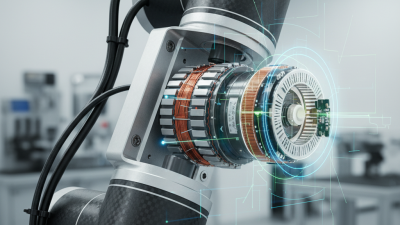
A brushless DC servo motor pairs a motor, position sensor, drive, and controller. The controller compares the commanded position with feedback from an encoder or resolver. That difference is the error signal. The drive then adjusts current in the motor windings to reduce the error and move the shaft accurately. For example, a packaging arm can slow as it nears a pick point instead of striking it at full speed.
The control loop keeps checking position, speed, and often current. Commutation electronics switch winding currents in sequence, creating a rotating magnetic field that follows the rotor. When a load changes, feedback helps the drive compensate. The result can be smooth, repeatable motion, though tuning matters. Too much gain may cause vibration; too little can make movement feel sluggish. The setup is not magic. Cable noise, sensor alignment, and mechanical backlash can still affect performance.
Tips: Match the encoder resolution and drive settings to the task. Test with the real load, not just an unloaded shaft. Listen for chatter, and check motor temperature during repeated cycles. A small speed ripple may be harmless, but it deserves investigation before production use.
What Performance Benefits Does It Offer?
A brushless DC servo motor can deliver precise speed and position control across changing loads. Electronic commutation replaces mechanical brushes, reducing wear and avoiding brush-related electrical noise. On a packaging line, that can mean repeatable stops at each index and fewer routine brush replacements. No brush dust.
Its key performance benefit is responsive control. An encoder reports the shaft’s position, allowing the drive to correct small errors as they occur. This helps a motor accelerate, slow down, and hold position with greater consistency. It can also provide strong torque for its size, useful when a compact axis must move a loaded fixture. Still, feedback quality and control tuning matter; a motor alone cannot guarantee accuracy.
Brushless designs often suit applications with frequent starts and stops because they avoid brush contact and can run efficiently over a broad speed range. Heat still needs attention. Stator windings can warm during sustained high-torque operation, so mounting, airflow, and duty cycle affect real performance. I would not judge a servo by peak speed alone. Check its torque curve and response under the machine’s actual load, where results can be less tidy than a specification sheet suggests.
Where Are Brushless DC Servo Motors Used?
Why Choose a Brushless DC Servo Motor?
Where Are Brushless DC Servo Motors Used?
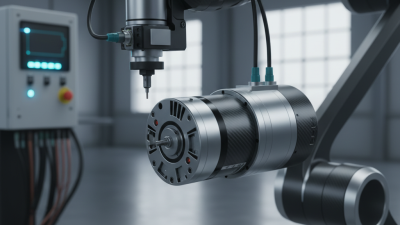
Brushless DC servo motors are used wherever equipment must control position, speed, or torque with precision. In pick-and-place robots, they move parts between trays and fixtures, then stop at defined coordinates. Encoder feedback helps the control system correct motion as conditions change.
Quick moves. Accurate stops.
Packaging machines use them to feed film, index containers, and synchronize filling steps. On CNC equipment, servo motors drive axes that need repeatable movement along a programmed path. Automated inspection systems also rely on compact servos to position cameras or rotate components under fixed lighting. The details matter: a few millimeters of drift can spoil an inspection or create inconsistent packaging.
They also appear in laboratory instruments, printing equipment, and small material-handling systems. These applications benefit from responsive control and smooth low-speed motion. But the motor alone does not guarantee accuracy. The drive, encoder, load, and mounting all affect performance. A motor that works well on a light camera stage may struggle with a heavy fixture. Sizing requires care, and real machines sometimes reveal vibration or heat that a specification sheet misses. That is worth checking early.
What Factors Guide Motor Selection?
A brushless DC servo motor can deliver precise speed and position control, but the right choice depends on the machine, not just the motor. Start with the load’s continuous and peak torque, operating speed, and duty cycle. A conveyor moving steady packages has different needs from a pick-and-place arm that accelerates sharply. Check the torque-speed curve at your actual supply voltage. Peak torque alone can mislead. I still find it easy to overvalue that impressive short-duration number.
Inertia matching, heat dissipation, and control compatibility matter too. Compare the motor’s rotor inertia with the load, and allow for frequent starts, stops, and any braking energy. Fit matters. The International Energy Agency’s 2011 report, Energy-Efficiency Policy Opportunities for Electric Motor-Driven Systems, estimated that motor-driven systems used about 45% of global electricity. That figure covers many motor types, not servo motors alone, but it underscores why efficiency should be assessed across the motor, drive, and load. Also check encoder resolution, mounting space, ambient temperature, and protection against dust or moisture. A slightly oversized motor may seem safer, yet it can add cost and reduce efficiency at light loads. Measure the real operating profile where possible; estimates are often imperfect.