Top Brushless Servo Motor Manufacturers Worldwide?

Choosing a Brushless Servo motor manufacturer is rarely as simple as comparing catalog prices. A packaging line may need precise positioning at high speed, while a machine tool may prioritize torque stability and thermal performance. Small details matter: encoder resolution, cable routing, flange dimensions, and the drive’s communication interface can affect installation and uptime. A promising specification sheet is only a starting point.

This overview examines manufacturers worldwide through practical criteria, including product range, customization, technical documentation, support, and application experience. It also considers how companies address integration questions, such as tuning, feedback compatibility, and replacement parts. Those details are easy to overlook. They can become costly later. No single ranking fits every buyer, and public product information does not always reveal service quality or long-term reliability. That is a real limitation. Readers should verify current specifications, regional support, and certifications directly with each supplier before making a purchase decision. The goal is not to declare one universal winner, but to help engineers and procurement teams build a more informed shortlist. A careful comparison may take longer, yet it often exposes gaps that a headline or brochure cannot show.
Top Brushless Servo Motor Manufacturers Worldwide?

What Brushless Servo Motors Are and Where They Are Used

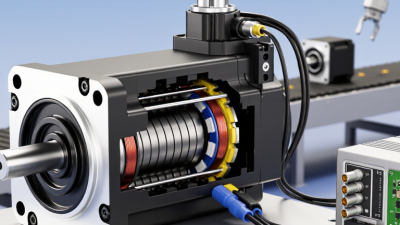
A brushless servo motor uses permanent magnets and electronic commutation instead of mechanical brushes. Paired with a drive and encoder, it adjusts position, speed, or torque through continuous feedback. That control matters when a robot arm must stop above a small fixture or a packaging line must place labels consistently. Brushless designs avoid brush wear, but they still need suitable cooling, alignment, and bearing maintenance. Less wear, not no maintenance.

Common applications include industrial robots, CNC machines, automated packaging equipment, and precision assembly systems. The International Federation of Robotics reported 4,281,585 industrial robots in operation worldwide at the end of 2023, a 10% increase from 2022. This figure describes robot installations, not servo-motor sales, but it shows the scale of equipment that depends on controlled motion. A servo is not always the right choice: simple conveyors may need less precise, lower-cost motors. In practice, sizing can be imperfect; load changes and heat are easy to underestimate.

Tips: Check peak torque, duty cycle, encoder resolution, and ambient temperature together. Leave room for real-world variation. Test the motor under the machine’s actual load before finalizing the design.


How to Evaluate Brushless Servo Motor Manufacturers

How to Evaluate Brushless Servo Motor Manufacturers

A reliable evaluation starts with the motor’s real operating conditions, not a polished catalogue. Define required speed, continuous and peak torque, load inertia, duty cycle, and ambient temperature. Then compare published torque-speed curves and thermal limits against your machine’s actual profile. Ask for overload duration and encoder accuracy, too. A peak rating without its permitted duration tells little. A neat brochure is not proof.

The International Federation of Robotics reported about 541,000 industrial robot installations in 2023, with roughly 4.28 million robots operating worldwide. These figures show the scale of automation, but they do not certify any motor supplier. Request test reports for noise, vibration, temperature rise, and repeatability. Check that samples match production specifications, and ask how failures are traced and corrected. Documentation can be imperfect; verify details rather than assuming.

Tips: Send shortlisted manufacturers the same load profile and request comparable test data. Confirm drive compatibility, service response times, spare-part availability, and warranty terms in writing. If possible, run a sample under load for several hours. Small checks matter. A supplier’s responsiveness during technical review may reveal gaps, though it is not a substitute for measured performance.

Leading Brushless Servo Motor Manufacturers Around the World

Leading brushless servo motor manufacturers serve robotics, packaging, machine tools, and electronics production. Their strengths vary: some focus on compact motors for precise motion, while others build high-torque systems for demanding factory lines. Regional expertise matters, but it does not guarantee a good fit.

The International Federation of Robotics reported 541,302 industrial robot installations worldwide in 2023. Asia accounted for about 70% of installations, supporting strong regional demand for servo systems. This is a useful demand indicator, not a direct measure of servo motor sales. Numbers need context. Buyers should compare continuous torque, encoder resolution, thermal limits, and drive compatibility using published specifications. A motor that performs well on a clean test bench may behave differently beside a hot spindle or under repeated acceleration.

Manufacturing experience is visible in the details: winding consistency, bearing life, sealing, and the clarity of service documentation. Ask manufacturers for test conditions, not just peak ratings. Still, supplier rankings can be misleading. Public market reports rarely separate brushless servo motors cleanly from broader motion-control categories, and this makes direct comparisons uncertain. A careful shortlist should weigh application data, regional support, and long-term parts availability together.

How Manufacturers Differ in Products and Technical Capabilities

Brushless servo motor manufacturers differ less by catalog size than by how well their products fit a machine’s real operating conditions. Some focus on compact motors for robotics, while others support high-torque units for packaging or machine tools. Compare continuous torque, peak torque, speed range, and thermal limits—not just rated power. A motor that fits a drawing may still overheat during repeated acceleration.

Technical capability also shows in feedback options, drive compatibility, and customization. Check encoder resolution, communication interfaces, shaft and flange choices, and documented tuning support. Ask how performance is tested under load, and whether the supplier can provide thermal or torque-speed curves. Details matter. A clean datasheet is useful, but it cannot replace application testing. I have seen selections look sound on paper, then require retuning after the load profile changed. That possibility deserves attention.

Tips: Share the real duty cycle, load inertia, ambient temperature, and available mounting space. Request a matched motor-and-drive proposal, then verify it on the machine. Leave margin for heat and peak demand, but avoid oversizing without a reason.

What to Consider When Choosing a Brushless Servo Motor Manufacturer

Top Brushless Servo Motor Manufacturers Worldwide?
What to Consider When Choosing a Brushless Servo Motor Manufacturer

Choosing a manufacturer starts with the application, not a catalog headline. Define the required torque, speed range, duty cycle, and operating temperature. A motor driving a packaging axis may need rapid starts and stops, while a pump may run steadily for hours. Ask how the supplier verifies performance across those conditions. Request test data, dimensional drawings, and clear ratings for continuous and peak torque. Ask for evidence.

Check how the motor works with your drive, encoder, and control system. Confirm connector pinouts, feedback resolution, communication options, and tuning support before ordering. A technically capable supplier should explain limits plainly, including heat buildup, vibration, and expected service intervals. Ask about sample availability, production consistency, and how faults are investigated. Small details matter. I have seen a compatible-looking shaft or cable create avoidable installation delays; specifications can still leave room for interpretation.

Tips: Send the manufacturer your load profile and a sketch of the mounting space. Ask for a written response on tolerances, testing, lead times, and support after delivery. Compare answers, not just quoted prices. A low-cost option may fit well, but unclear documentation can make commissioning slower. No checklist catches everything. Check the fit on your actual machine.

Top Brushless Servo Motor Manufacturers Worldwide? — What to Consider When Choosing a Brushless Servo Motor Manufacturer

Selection Dimension Data to Compare What to Verify Why It Matters
Continuous and peak torque Rated continuous torque (N·m), peak torque (N·m), and the permitted peak duration or duty cycle Request the motor’s torque–speed curve and confirm that the application’s load profile stays within its continuous and temporary limits. Peak torque is not a continuous operating rating. Using it beyond the specified duration can cause overheating or shorten motor life.
Speed and mechanical power Rated speed, maximum speed, and continuous power (W or kW) Check the torque available at the required operating speed, not just the motor’s maximum speed or power rating. Mechanical power depends on both torque and rotational speed: P = T × ω, where P is power, T is torque, and ω is angular velocity.
Motor and load inertia Rotor inertia, reflected load inertia, and the required acceleration and deceleration times Ask the supplier to assess the motor–load inertia match using the actual transmission ratio and motion profile. Inertia affects acceleration, settling time, and the effort required from the servo drive. A poor match may make tuning more difficult.
Feedback and positioning Feedback-device type, resolution, absolute or incremental operation, and compatibility with the intended drive Confirm the feedback interface, resolution specification, commutation method, and required cabling with the drive supplier. Feedback affects position and speed control. Resolution alone does not establish system accuracy, which also depends on mechanics, control, and installation.
Electrical and drive compatibility Rated voltage, current, winding options, and compatible servo-drive models or interfaces Obtain the motor and drive specifications together, including current limits, wiring details, and any required drive parameters. A motor’s rated voltage or current by itself does not guarantee compatibility with a particular servo drive.
Thermal performance Continuous-duty conditions, allowable ambient temperature, cooling method, and temperature-sensor options Check the conditions under which the rated torque is specified and whether installation or cooling requirements apply. Available continuous output can change with ambient temperature, mounting, cooling, and duty cycle.
Environmental protection Ingress Protection (IP) rating, operating-temperature range, and any stated resistance to dust, moisture, or washdown Request the exact rating for the motor configuration being quoted and confirm that it suits the installation environment. IP ratings classify protection against access to hazardous parts, solid objects, and water under specified test conditions; they do not mean a motor is suitable for every harsh environment.
Mechanical fit and installation Frame dimensions, shaft size, mounting pattern, key or keyway details, connector orientation, and brake options Compare dimensioned drawings with the machine design and confirm shaft, mounting, and connector details before ordering. Matching the mechanical interface reduces redesign, alignment problems, and installation delays.
Standards and safety documentation Applicable standards, declarations, test reports, and installation instructions for the intended market Request documents for the exact motor and drive configuration. IEC 60034 covers rotating electrical machines; IEC 61800-5-1 addresses safety requirements for adjustable-speed electrical power drive systems. Standards and documents help assess technical and market requirements, but applicability depends on the product, system, and destination country.
Quality and manufacturing controls Quality-management certification scope, production testing, traceability, and change-control practices Check certificate validity and scope, and ask what routine tests and traceability records are provided for shipped motors. ISO 9001 specifies requirements for a quality-management system; certification alone does not guarantee that a particular motor meets an application’s performance needs.
Customization and engineering support Available winding, shaft, connector, brake, feedback, and cable options; engineering response and sample lead time Request a written specification and confirm how design changes, approvals, and production versions will be documented. Clear configuration control helps ensure that prototypes and production units remain consistent with the approved design.
Supply, service, and lifecycle support Quoted lead time, spare-parts availability, warranty terms, repair process, and product-lifecycle notices Ask for the applicable terms in writing and identify the support route for the regions where the equipment will operate. Service and replacement planning can affect equipment uptime and total ownership cost over the product’s operating life.

Use this checklist to compare manufacturer proposals against the same application requirements. Ratings, certifications, and specifications should be verified for the exact motor and drive configuration under consideration.